Showing posts with label Oprah. Show all posts

Thursday, March 11, 2010

Food 101 on Oprah: Michael Pollan and other food fighters


Michael Pollan recently visited Indiana University, to give an address at the IU Auditorium during Arts Week. This was bliss for me: food and/as art in an intelligent, entertaining conversation reaching thousands of people. Because Gary Paul Nabhan (a chile head from the southwest) and Come-to-Jesus! real food evangelist Joel Salatin also came here in January, awareness of food issues has been growing. More people from more walks of life are making both significant and small personal changes in the direction of a more equitable local sustainable food system.

But let me emphasize: it is not easy. We have magical notions about food, tending to assume that there are enough growers and producers out there to supply us with the quality food we may want to eat.


Pollan was on Oprah Winfrey's show today. She has a link at her website to an interview with him at O magazine: "How to Break Bread (and Poor Eating Habits)."

Remember when Oprah was sued by Texas cattlemen for her criticism of the meat industry? Here is "The Trouble with Meat," an article by Jim Motavalli from E magazine in 1998: "Why Oprah Was Right, The Texas Cattlemen Were Wrong, and the Crisis Facing the American Hamburger Isn't Over."

The trouble with meat was revisited in the movie Food, Inc., also a topic on today's Oprah. In fact, she mentioned a special deal at Amazon through March 17th; you can buy the DVD and a download for $9.99. I thought about that again, in appreciation of Oprah's willingness to bring these issues to not just the rivulets and the backwaters, but the mainstream.


I started my day at a breakfast for Mother Hubbard's Cupboard food pantry (more on that tomorrow), did some work on various projects for my food co-op, spent some time researching food issues at Fair Food Fight, worked on an article about gardening, and then watched Michael Pollan and vegan actress Alicia Silverstone on Oprah. (Yes, it's true and the word spread on twitter – she talked unselfconsciously about her poop.)


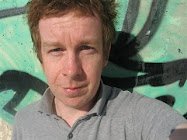
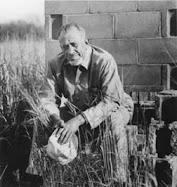
Somewhere along the way I discovered my new food motto, borrowing from Michael Pollan and taking inspiration from Fair Food Fight's Barth Anderson (that's him in the black and white photo):

Eat Food - Not Too Much - Mostly Plants 
– and Add One Food Rant Per Day

Now to make some curried coconut carrot soup.

Wednesday, December 17, 2008

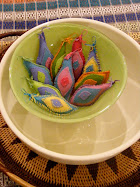
The Tapestries of Kopanang


We are home today with ice on the roads, closing the schools. Last night Andreas made a harrowing trip back from Terre Haute in time to meet me at the Sounds of South Holiday Concert, where we heard Savannah sing with the choir. It was a wonderful show – there's nothing like being entertained by your children! They are sleeping soundly as I write, a luxury for teenagers on a weekday.

I continue to think about The Cosmic Walk, and was delighted when my mother sent over this message from Phebe Hanson. I was going to summarize it, but Phebe says it best:

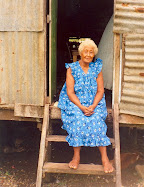
Dear Joyce--I'm amazed that Ellen found that article in the League of Catholic Women newsletter and that the 80th birthday celebration was mentioned in an African [American] newsletter. I was at the World Aids Day meeting at the League of Catholic Women--maybe 2 years ago on December 1--and went several times to St. Olaf Catholic Church in downtown Mpls. to see that amazing tapestry exhibit. I called friends and family and ORDERED them to run not walk to see the exhibit. It was amazing! Only ran for a weekend here. Would love to see it again. Some of those women had never held a needle before they began on that project. An Irish nun [Sister Sheila Flynn] was responsible for its coming into being. She wanted the HIV women in her South African mission to have something of value to do. Pass this on to Ellen please. What is her email? Or would I find it on her blog. My eyesight is so bad these days I often miss little details. I have a chronic condition, one of the legacies of Wegener's Granulomatosis (first diagnosed in 1989), called "smoldering iritis." (Sounds like a romance novel!) Love, Phebe

I tracked down another article about The Cosmic Walk, from The Michigan Catholic, in the Archdiocese of Detroit, published in late November 2004. There is also a Word doc on-line that mentions:

Oprah Winfrey opened the Leadership School in Johannesburg for disadvantaged girls, fulfilling a promise she made to former President Nelson Mandela six years ago and giving more than 150 students a chance for a better future. Oprah has commissioned thirteen tapestries from Kopanang Art Project for the school. She said:-“Girls who are educated are less likely to get HIV/AIDS, and in this country which has such a pandemic, we have to begin to change the pandemic."

Kopanang means "gathering together" or "building bridges." This project connects to many of my interests: collaborative artworks, HIV/AIDS education (a project of my sister in Papua New Guinea), and now, to Phebe and poetry. I also love the easy acceptance of evolution as part of God's plan: no reducing the long cosmic walk to a literal interpretation of the Bible!

As for my email address: it can be found under "Contact" on my profile page. I love hearing from readers, and can also be found in facebook. And there is the trusty comments page, accessed by clicking on the word "comments" below each post.

It's all about gathering together, building bridges. And today, with the ice, about hunkering down indoors a little bit longer...

Saturday, November 22, 2008

Recovery, by John Berryman


Addiction memoirs abound today, including The Night of the Gun by David Carr, media columnist and culture reporter for the New York Times. Carr recalls his years as a cocaine addict and dealer in the Twin Cities, admiting to having beaten his wife. After leaving his infant twin daughters in a freezing cold car one night (only to find them miraculously alive hours later) he was finally able to kick his habit, advance his career as a journalist, remarry, repair his relationships with his daughters, and set about to write this account. He interviewed people from his past, reflecting on the impact of his recklessness. (He also changed his physical appearance from stocky to gaunt, and it's a bit odd to see the number of recent photos of him on the web, holding what appear to be alcoholic beverages.)

Anyway, fair enough: Carr is a much better writer than the infamous James Frey, author of A Million Little Pieces, a book that sold millions of copies thanks to Oprah's endorsement. Frey was confronted by Oprah on national television after being exposed by The Smoking Gun for what they called his "fiction addiction." (Wouldn't that be an "addiction fiction"?) This set off a discussion of truth, lies, and authorial license that deserves better writing than that offered by Frey, whose prose style is atrocious and whose sensibility short on intelligence, insight, or inspiration. (I know, that was harsh.)

As Maia Szalavitz notes in a piece called "Why Former Addicts Dread Addiction Memoirs", the topic fascinates because it touches on free will, morality, neuroscience, sociology, psychology, and politics. It may also deal, as it does in Berryman, with the making of art.

Long before any of these recent books hit the shelves, the poet John Berryman wrote most of his only novel, Recovery; perhaps this was the first contemporary addiction memoir. In the character of Alan Severance, a stumbling, self-deprecating, self-aggrandizing writer, Berryman makes a heartbreaking effort to overcome both addiction and despair, submitting to a treatment center routine of 12-step encounter groups, compassion, and confrontation.

Recovery is fascinating for tracking the internal workings of a mind tuned to the frustrations and compensations of self-expression. It offers his painstaking attempt to make sense of the tragic dimensions of the past personal. Berryman was also grappling with religious issues, seeking a spiritual framework that would accomodate his capacious mind and enable him to more easily make the decision to surrender to a higher power. The Thunder Mouth Press edition of this book includes prefaces by Saul Bellow and Philip Levine, and an early story by Berryman called "The Imaginary Jew," published in The Kenyon Review in Autumn 1945.

Recovery is dedicated "To the Suffering Healers." The book is impossible to read without mourning the sadness of Berryman's suicide or gaining insight into the anguish of those who are caught within the physical and psychological torment of addiction.

And in light of all the fuss about recent disingenuous memoirs, I appreciated the wry opening note:

I don't write as a member of the American and international society, Alcoholics Anonymous (founded 1935), but as an author merely who has experienced certain things, witnessed things, heard things, imagined some. The materials of the book, however, especially where hallucinatory, are historical; all facts are real; ladies and gentleman, it's true.