Showing posts with label Lewis Hyde. Show all posts

Wednesday, November 19, 2008

The Church of Beethoven...or Berryman


My brother John Kennedy, of Santa Fe New Music, called my attention to this NPR story about the Church of Beethoven, in Albuquerque, New Mexico, founded by cellist Felix Wurman, who sometimes performs with Santa Fe New Music. Housed in an abandoned gas station along old Route 66, the Church of Beethoven offers an experience of music that goes beyond entertainment and the concert. It provides community, a spiritual experience, and "church for people who don't go to church." (I love the repurposed canoe that serves as signboard.)

The Santa Fe New Music site also explores community and the conceptual dimensions of music. It includes audio and video clips; if you head over there, you can catch a glimpse of what's new in New Music, filling your ears with beautiful sounds. John has been giving a lecture series at the Georgia O'Keefe Museum called "Beyond the Noise: Listening to Modern Music." The course is inspired in part by 2008 MacArthur “Genius” Award-laureate Alex Ross’ recent book: The Rest Is Noise: Listening to the Twentieth Century.

John suggests that writers could start a church of Berryman, and I've been wondering about that. I turned last night to my copy of John Berryman's unfinished novel, Recovery, in its 1993 Thunder Mouth Press edition. This book includes the 1973 introduction by Saul Bellow mentioned by Lewis Hyde, a spur for his argument that alcohol destroyed Berryman, dismantling his gift. Bellow claimed "Now came the poems. They were killing him." I think Hyde was very insightful to contest that.

Philip Levine's essay "Mine Own John Berryman", written in 1993, is a wonderful supplement to the novel, and to Bellow's picture of Berryman as his colleague at the University of Minnesota in the 50s. Levine describes in vivid detail the experience of being a student of Berryman the one time he taught a poetry writing class, at the Iowa Writers' Workshop in 1954. The portrait is of a man who "gave all he had to us and asked no special thanks. He did it for the love of poetry."

Tuesday, November 18, 2008

Imagination and the (Erotic) Life of Property


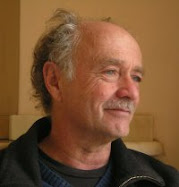
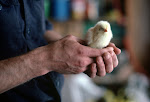
I learned in the NYT profile "What is Art For?" that Lewis Hyde now lives in Cambridge, Massachusetts, in a "beautiful, bright house, in whose back garden stands the trellis-covered studio — a former turkey pen — where Hyde was a tenant when he wrote The Gift." A turkey pen! Hyde himself is like a heritage turkey: a rare bird in the tradition of Emerson, Thoreau, and Whitman. His newest work, on the public commons, wrestles with notions of individual genius and the myth of self-reliance.

I'm glad to know that The Gift helped established a life of the mind for Hyde, who wrote an earlier essay titled "The Tuber Mind": this seems like an instance of poetic justice. The Gift was mentioned in a blog post at the New York Times, "Re-Gifting" by Dwight Garner, on January 15, 2008, in an entry that reprints in full the less-than-lukewarm review written by Martha Bayles when the book first came out in 1983.

Several weeks later a diverse group of poets (Gary Snyder, Wendy Salinger, Robert Pinsky, Frank Bidart, Patricia Hampl, and Donald Hall) retorted with a defence of The Gift as "the first attempt at a general theory of gift exchange in over half a century and the only attempt that we know of to apply that theory to the situation of creative artists born into a market-oriented society."
The poets' letter seems somewhat naive today, in its claim that "Mr. Hyde’s work is a part of the search to regain the unity of economic, esthetic, social and religious life" – as if such a thing ever existed. But since The Gift was published we've become a culture obsessed with Rhonda Byrne's derivitive and peculiar multi-media industry The Secret, which promises "a new era for humankind in which...the power of love and gratitude will dissolve all negativity in our lives; no matter what form it has taken." I'll take the gift over the secret any day (– forgive me if that comment hinted at negativity!).

The full title of Hyde's first book is The Gift: Imagination and the Erotic Life of Property. I want to reread it now, in this moment of crazy-making economic restructuring. (Wait, we are bailing out the banks and credit cards?! Don't I give them enough money already?) In the years since it first appeared, I've found myself thinking about Hyde whenever I've encountered traditional currencies: the bride price of shells collected throughout the Trobriand Islands, given to my parents when my sister married a man from Papua New Guinea; the banana leaves that her mother-in-law, Sarah, scores and stores up in great piles, to redistribute during sagali, memorial events for the dead.

I thought of this book just last week, in fact, when visiting the IU Art Museum, looking at a show of traditional African currencies that includes jewelry, farm implements, and weapons, presented to the Art Museum by Santa Fe blacksmith sculptor Tom Joyce. And I wonder about it when I tour Etsy.com, cruising for works of art made by individual artisans.

Monday, November 17, 2008

Lewis Hyde, on Poet John Berryman (and Berryman on William Carlos Williams)


Yesterday, while flipping through the New York Times Sunday magazine en route to "The Exit Interview" with Condoleezza Rice, I glanced upon the name "Hyde" on an earlier page, and thought "Wouldn't it be great if this was an article about Lewis Hyde?" And in fact it was: a piece by Daniel B. Smith called "What is Art For?" Okay, I'm an Ideal Reader for this kind of writing, and I'll return to it again in the future. For now, a focus on poetry.

I first heard of Lew Hyde way back in the mid-70s, when he wrote his provocative essay "Alcohol and Poetry: John Berryman and the Booze Talking." I just pulled it off the shelf to read it again. I remember being shocked at the time by the blunt tone – the short emphatic sentences rendering judgment, and the unambivalent assessment of Berryman as drowned in self-pity and self-abuse. The beginning of the essay reads like a pitch for Alcoholics Anonymous, an odd thing to find in The American Poetry Review in 1975. (But then Blake Edwards's brilliant film Days of Wine and Roses, starring Jack Lemmon and Lee Remick, came out in 1962, and it includes an outright pitch for AA, too. And now I'm wondering: will Don and Betty watch Days of Wine and Roses on the next season of Mad Men?)

When a student at the University of Minnesota, I often walked across the Washington Avenue Bridge, where Berryman pitched his body down. I tried many times to read Berryman's The Dream Songs, but they didn't fully capture my interest: they belonged to the legendary tragic figure, a chain-smoking bearded professor who stumbled through inadvertently brilliant humanities courses while intoxicated. Later I knew his daughter Martha, when she was in high school; we talked about writing, but never about her dad. (Here's an article about Berryman focused on Kate Donahue, his last wife, Martha's mother.)

In 1993 Hyde wrote another piece called "Berryman Revisited: A Response," published in Recovering Berryman: Essays on a Poet. Ed. Richard J. Kelly and Alan K. Lathrop (Ann Arbor: University of Michigan Press, 1993). Both essays are vehicles for thinking about connections between alcohol and spirit, and for wondering about the role of alcohol in the lives of those many writers whose lives have not ended or proceeded well.

Here is Berryman's Dream Song 324, "An Elegy for W.C.W." It pays tribute to poet-physician William Carlos Williams, a writer who was famously capable of living an engaged and inspiring life, unburdened by the disease of alcoholism.

Henry in Ireland to Bill underground:
Rest well, who worked so hard, who made a good sound
constantly, for so many years:
your high-jinks delighted the continents & our ears:
you had so many girls your life was a triumph
and you loved your one wife.

At dawn you rose & wrote--the books poured forth--
you delivered infinite babies, in one great birth--
and your generosity
to juniors made you deeply loved, deeply:
if envy was a Henry trademark, he would envy you,
especially the being through.

Too many journeys lie for him ahead,
too many galleys & page-proofs to be read,
he would like to lie down
in your sweet silence, to whom was not denied
the mysterious late excellence which is the crown
of our trials & our last bride.