Showing posts with label David Foster Wallace. Show all posts

Thursday, May 21, 2009

Toys 'R' Us Groceries: Everything for Parenting "Under One Roof"


In an effort to put "everything [parents] need for their kids under one roof" the giant chain store Toys 'R' Us is planning to open grocery departments ("R" Markets) in the front of over half of its stores, with more rolled out later in the year. Here, from Supermarket News, is the company plan:

The goal of the shop is to position Toys 'R' Us as a one-stop shopping destination for families and kids. Each “R" Market features snacks like chips, puffs and pretzels, cookies and crackers, fruit snacks, cereals and nutrition bars, as well as juice boxes, and bottled water. Paper goods include napkins, paper towels and toilet paper. Baby food and infant formula brands include Gerber Earth’s Best Organic, Similac, Enfamil and Nestlé Good Start.

A dedicated candy section contains chocolate, lollipops, novelties like Pez dispensers, cotton candy, mints, and sour and hard candies, along with a wall of theater candy boxes.

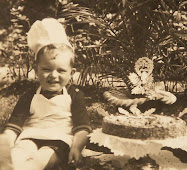
Eeeew. I am trying to imagine the day of a mother with young children, stopping in at the "R" to pick up items for dinner: an even more stressful supermarket scenario than the one described by David Foster Wallace in his Kenyon College Commencement speech. Roll into the huge parking lot, get the kids from their car seats, pile them into a huge grocery cart, and then take them into the friendly Big Box store where you can find every single thing they need, from infancy (all that Similac!) on up – to their very own plastic play kitchens, and beyond. And so very convenient to have that whole wall of blockbuster candy, right there where you need it! At least we've got a boy "cooking" (and chatting on the cell phone) in one of those monstrous plastic kitchens, pictured here.

It's remarkable how out of touch Toys 'R' Us seems to be regarding parenting trends, including concerns about plastic toys, infant formula, and conspicuous consumption. "R" Markets are a half-baked ploy derived from the specious notion that gigantic over-lit warehouse stores can rescue us from time pressures. Hmmm, this mom is not at all convinced: I prefer a much more "roofless" parenting mix.

Wednesday, May 20, 2009

David Foster Wallace: A Soul-Sucking Trip to the Supermarket


My copy of The Best American Nonrequired Reading 2006, edited by Dave Eggers, arrived yesterday. It's perhaps the last copy of this book available right now on the Internet, snatched up by readers for its final piece, David Foster Wallace's Kenyon College Commencement Speech of 2005, written about earlier here at elenabella.

It's a fine collection that gives a word picture snapshot of the times, including Best Fake Headlines from The Onion ("Case of Glitter Lung on the Rise among Elementary School Art Teachers") and Best New Words and Phrases (downlow, dramedy, geocaching, greige, podcast, spendy, and twofer make the 2006 list).

Coming from a national co-op grocery marketing conference last week, where we talk a lot about the quality of experience offered to our shoppers, I was quite amazed to see that the heart of Wallace's speech is the story of an alienating trip to a super-lit sensory-deadening supermarket. Here is how he describes the numbing effects of everyday adult life:

By way of example, let's say it's an average day, and you get up in the morning, go to your challenging job, and you work hard for nine or ten hours, and at the end of the day you're tired, and you're stressed out, and all you want is to go home and have a good supper and maybe unwind for a couple of hours and then hit the rack early because you have to get up the next day and do it all again. But then you remember there's no food at home -- you haven't had time to shop this week, because of your challenging job -- and so now after work you have to get in your car and drive to the supermarket. It's the end of the workday, and the traffic's very bad, so getting to the store takes way longer than it should, and when you finally get there the supermarket is very crowded, because of course it's the time of day when all the other people with jobs also try to squeeze in some grocery shopping, and the store's hideously, fluorescently lit, and infused with soul-killing Muzak or corporate pop, and it's pretty much the last place you want to be, but you can't just get in and quickly out: You have to wander all over the huge, overlit store's crowded aisles to find the stuff you want, and you have to maneuver your junky cart through all these other tired, hurried people with carts, and of course there are also the glacially slow old people and the spacey people and the ADHD kids who all block the aisle and you have to grit your teeth and try to be polite as you ask them to let you by, and eventually, finally, you get all your supper supplies, except now it turns out there aren't enough checkout lanes open even though it's the end-of-the-day-rush, so the checkout line is incredibly long, which is stupid and infuriating, but you can't take your fury out on the frantic lady working the register.

Anyway, you finally get to the checkout line's front, and pay for your food, and wait to get your check or card authenticated by a machine, and then get told to "Have a nice day" in a voice that is the absolute voice of death, and then you have to take your creepy flimsy plastic bags of groceries in your cart through the crowded, bumpy, littery parking lot, and try to load the bags in your car in such a way that everything doesn't fall out of the bags and roll around in the trunk on the way home, and then you have to drive all the way home through slow, heavy, SUV-intensive rush-hour traffic, etcetera, etcetera.

Throughout the speech, Wallace is examining our notions of freedom, and our tendency to see ourselves at the center of the universe ("the freedom to be lords of our own tiny skull-sized kingdoms, alone at the center of all creation"). He's urging more imaginative awareness:

...the freedom of real education, of learning how to be well-adjusted: you get to conciously decide what has meaning and what doesn't. [ ...] The real important kind of freedom involves attention, and awareness, and discipline, and effort, and being able truly to care about other people and to sacrifice for them, over and over, in myriad petty little unsexy ways, every day.

Without realizing it, Wallace is talking about the kind of culture co-op grocery stores work to create – with real connections to member-owners, customers, staff, and suppliers – and the conscious effort it takes to build and sustain quality interactions. I wish he'd been a customer at one of our stores, with a humanizing, restorative experience, a cashier who could talk to him about his writing (or at least ask "how's it going?"), a familiar place to energize and revive his day.

Never underestimate the far-reaching effects of a visit to the grocery store, whether it's a good trip or bad.

The Wall Street Journal reprinted most of the speech in full; you can find it at this link. They leave off the final couple of sentences, which I've restored below:

It is unimaginably hard to do this – to live consciously, adultly, day in and day out. Which means yet another cliché is true: your education really is the job of a lifetime, and it commences – now. I wish you way more than luck.

Tuesday, May 12, 2009

David Foster Wallace's Kenyon College Graduation Speech


It's graduation season. The April 26 New York Times Book Review included a piece about novelist David Foster Wallace, whose commencement address at Kenyon College in May 2005 has now been published as a book by Little Brown: This is Water: Some Thoughts, Delivered on a Significant Occasion, about Living a Compassionate Life.

(There's a quote on the Little Brown page from a review: "Wallace might just be the smartest essayish writing today" - THE GUARDIAN. Hello, does anybody proofread anymore? Wallace might have gotten a kick out of that one, but it looks pretty lame sitting on the page of a book that is getting a lot of attention these days.)

Writer Tom Bissell, in the NYT Book Review, notes sympathetically the excision in the essay of a significant sentence, the second one in this phrase:

It is not the least bit coincidental that adults who commit suicide with firearms almost always shoot themselves in: the head. They shoot the terrible master.

In the book, every sentence stands alone on its own page, perhaps to give it something like "added profundity." White space rests the eye, and the mind – the very one Wallace recalled in relation to “the old cliché about the mind being ‘an excellent servant but a terrible master.’ ” Bissell notes that the speech had previously come across his desk via email, as a transcript that had been posted, and widely circulated, on the Internet.

On May 10th The Book Review contained a correction: the Kenyon address had also been published earlier in The Best American Non-required Reading 2006, edited by Dave Eggers. Somewhat suspicious of the pretentious layout in the new book (and irritated by the edit – the introduction of the terrible image makes more sense in relation to the sentence that follows), I thought I'd buy the essay in that anthology, which seems more fitting (to me) for Wallace, somehow.

Over at Amazon last Sunday afternoon, it was possible to find used copies of this book for as little as 79¢. But they are going, going, soon-to-be-gone. Here's a portion of one on-line reader's review, with comments about other Eggers-selected voices in the surrounding context:

This edition, like all the others increased my awareness of the world and my own relation to it. Which brings me to the first shout out. David Foster Wallace, who's written a lot of stuff that I just couldn't get into (Infinity and Beyond, anyone?), contributed a commencement speech that he gave at Kenyon in 2005. It blew my mind wide open...

Vonnegut's writing lessons were hilarious, Sweeney's religious meanderings were full of wonderful precision of language (reminding me of Kevin Smith's Dogma), and Saunders's fluctuating feelings about the Xtreme luxury of Dubai were an insight into how the disparity of wealth in the world affects people. I also enjoyed Rakoff's ambivalent conversion to American citizenship.

Murakami's story was a great modern parable about love, Lewis's essay said a lot about the insidious distrust of African-Americans that came to the surface during the aftermath of Hurricane Katrina, and Downey's sympathetic tale of an Al Qaeda soldier's journey illustrates the sentiment that in every conflict, each combatant always believes that he is right. And I loved the new stuff: the best first lines, the best new words, and especially the best facts about Chuck Norris!

As with any BANR, there were some pieces not to my taste, but on the whole, it has yet to disappoint.

Searching for the Egger's collection (which is rapidly disappearing from cyberspace, as did the link to Wallace's Kenyon address), I came across The Best American Essays, edited by David Foster Wallace and Robert Atwan. I also reread this tribute, by A.O. Scott, one of many concerned with Foster's death and legacy. This link, at The New Yorker blog, takes you to many other places, too, a "vast and growing system of Web sites, e-mails, message boards, and blogs—and comments on those blogs, and comments on those comments, ad infinitum. His life has a lot of footnotes." Here is a link to the longer portrait in The New Yorker, "The Unfinished" by D. T. Max.

Why do we care? Because writers give us a glimpse of the human psyche – the conflicted, complicated "terrible master" – available nowhere else.