Showing posts with label The New Yorker. Show all posts

Sunday, February 7, 2010

Shopping for Pomegranates at Wal-Mart with poet Campbell McGrath

It's Super Bowl Sunday. What better day for a little poetry rant?

I went to see Woody Guthrie's American Song two times within 24 hours, in part because I had been in a somewhat saddened-and-smoldering mood for too long, something like the one described below by poet Campbell McGrath. This was published in The New Yorker on January 11, 2010. It reminds me of my dad describing the Mall of America (one of his least favorite places), or the feeling of appalled-and-dulled alarm that comes when flipping through (at least) Fifty-Seven-Channels-and-Nothing's-On. It's not nothing: nothing would be a relief. Instead, we are material witnesses (or, to put it anthropologically, "participant-observers") of the chaos of late high capitalism, as described in the frenzied poem below.

Woody Guthrie's American Song, like Garrison Keillor's  A Prairie Home Companion the night before, restored my soul to a temporary sense of peace, not least because both involved real people engaged in creating something, paying attention to something, organizing and coordinating their efforts in order to make a dent in the direction of giving the world something immediate, meaningful, valuable, and deliberate. It just felt so much better than randomly sitting in front of the tv (for example), the way it feels to me to shop at the farmers' market or the food co-op, instead of at a place like Wal-Mart. (I do realize that I am setting up a good/bad opposition here; can't be helped, I'm afraid.)

I see a mythological subtext to this poem. Persephone, the daughter of Demeter (Earth-mother who presided over grains, fertility, the harvest and the seasons in classical Greek mythology) was spirited away to the Underworld (like Alice?), where she was tricked by Hades into eating pomegranate seeds. It was a rule of the Fates that whoever consumed food or drink in the Underworld was doomed to spend eternity there. This sounds like a trip to hell, too. Here is McGrath with a plastic orange rather than a pomegranate.

Shopping for Pomegranates at Wal-Mart on New Year’s Day

Beneath a ten-foot-tall apparition of Frosty the Snowman
with his corncob pipe and jovial, over-eager, button-black eyes,
holding, in my palm, the leathery, wine-colored purse
of a pomegranate, I realize, yet again, that America is a country
about which I understand everything and nothing at all,
that this is life, this ungovernable air
in which the trees rearrange their branches, season after season,
never certain which configuration will bear the optimal yield
of sunlight and water, the enabling balm of nutrients,
that so, too, do Wal-Mart’s ferocious sales managers
relentlessly analyze their end-cap placement, product mix,
and shopper demographics, that this is the culture
in all its earnestness and absurdity, that it never rests,
that each day is an eternity and every night is New Year’s Eve,
a cavalcade of B-list has-beens entirely unknown to me,
needy comedians and country singers in handsome Stetsons,
sitcom stars of every social trope and ethnic denomination,
pugilists and oligarchs, femmes fatales and anointed virgins
throat-slit in offering to the cannibal throng of Times Square.
Who are these people? I grow old. I lie unsleeping
as confetti falls, ash-girdled, robed in sweat and melancholy,
click-shifting from QVC to reality TV, strings of commercials
for breath freshener, debt reconsolidation, a new car
lacking any whisper of style or grace, like a final fetid gasp
from the lips of a dying Henry Ford, potato-faced actors
impersonating real people with real opinions
offered forth with idiot grins in the yellow, herniated studio light,
actual human beings, actual souls bought too cheaply.
That it never ends, O Lord, that it never ends!
That it is relentless, remorseless, and it is on right now.
That one sees it and sees it but sometimes it sees you, too,
cowering in a corner, transfixed by the crawler for the storm alert,
home videos of faces left dazed by the twister, the car bomb,
the war always beginning or already begun, always
the special report, the inside scoop, the hidden camera
revealing the mechanical lives of the sad, inarticulate people
we have come to know as “celebrities.”
Who assigns such value, who chose these craven avatars
if not the miraculous hand of the marketplace,
whose torn cuticles and gaudily painted fingernails resemble nothing
so much as our own? Where does the oracle reveal our truths
more vividly than upon that pixillated spirit glass
unless it is here, in this tabernacle of homely merchandise,
a Copernican model of a money-driven universe
revolving around its golden omphalos, each of us summed
and subtotalled, integers in an equation of need and consumption,
desire and consummation, because Hollywood had it right all along,
the years are a montage of calendar pages and autumn leaves,
sheet music for a nostalgic symphony of which our lives comprise
but single trumpet blasts, single notes in the hullabaloo,
or even less—we are but motes of dust in that atmosphere
shaken by the vibrations of time’s imperious crescendo.
That it never ends, O Lord. That it goes on,
without pause or cessation, without pity or remorse.
That we have willed it into existence, dreamed it into being.
That it is our divine monster, our factotum, our scourge.
That I can imagine nothing more beautiful
than to propitiate such a god upon the seeds of my own heart.

Saturday, January 30, 2010

In Praise of Kevin Barry's 'Fjord of Killary'


There were so many things I liked about Kevin Barry's story, "Fjord of Killary," appearing in The New Yorker this week. It was the first I'd heard of Barry, so there was that: the pleasure of "finding a shiny two-pound coin in a pile of muck," as Elaine Chiew puts it in The Short Review. (Not that the rest of The New Yorker content was mucky: quite the contrary.)

This was the pleasure of discovering a contemporary Irish writer who has an ear for the idioms of the West of Ireland as they might be given out these post-Celtic Tiger days at an old country pub. The protagonist is the owner of the Water's Edge Hotel, a middle-aged poet suffering under the ludicrous indignities of a "long silence" while serving drinks in the lounge bar where he thought he'd find purpose and a voice. Instead, he's drowning.

There's a psychological turn near the end of the story that nicely follows the pitch-perfect scenarios leading to it, with wilder, increasingly desperate social moments, vivid participants, and a rising sea. An otter is eating the carrot soup, and a black-backed gull tearing the head off its mate. Nature seeps in everywhere, and it is not sentimental and lovely; it is pagan, corrosive, and wild. The tone is at times wildly hilarious, perfectly absurd, and absolutely believable: a masterful combination.

The story contains "language." It gives the clientele of the pub a crude and booze-tinged view of the body in words that could be transcribed from conversations I recall overhearing in Irish bars: "It's not," says one old man, "like I'm going to take a lep at the little bitch. My leppin' days are long fuckin' over." The beauty is in the complete context of that phrase, and in that "lep."

The speaker is someone named Caoimhin (Irish for Kevin), and because he's a writer, it is tempting to imagine this is a "true story," and that we could find Kevin Barry tending bar near Galway, suffering from his dashed hopes. That's a nice loop, too – this is a true story of a different kind, crafted from scraps of experience but decidedly not a memoir or confessional tale. In the end, a Caoimhin discovers something profound (and profoundly Irish): the rigors (or rigor mortis?) of acceptance. The final epiphany is an energizing version of Irish Zen, an active high-tides-be-damned acceptance of the tragic and the absurd. I loved the last sentence.

Tracking down the craic about Barry, I surfed through a few Irish reviews. Here is an interview, by Eimear Ryan, and another in The Limerick Leader, from the town where Barry once was a journalist. And another interview in The Short Review, where the topic is Barry's There Are Little Kingdoms, a collection of short stories published in 2007 that subsequently won the Rooney prize for Irish Literature. Another here at Cheebah by Eilis Ni Leathlobhair. They note the author's kinship to J.M. Synge and to Beckett, and to the self-deprecating humor of Flann O'Brien (Brian O'Nolan), also a master of the form.

There's another Kevin Barry, of course: an early Irish Republican who was executed by the British in 1920, celebrated in a ballad, and given a state funeral in 2001 with nine other "volunteers from the War of Independence" ("The Forgotten Ten"), all of whom were eventually moved from Mountjoy Prison to be re-interred in Dublin at Glasnevin Cemetery. That's quite a lot of history to have echo in your name.


Wednesday, January 20, 2010

Rotorbrain: Color Theory and Other Interactivities


Over at Jonathan Foote's Rotorbrain Industries, you'll find two color interaction demonstrations that let you play with some of the concepts of Josef Albers' color theory.

The first one demonstrates how context influences our perception of colors. (You manipulate sliders to see how this works.)

The second demonstrates how color can influence our spatial perception.

This is a very rich, deep and remarkable website, where you can jump to "another damnable blog" (waxing prolix), and find wonderful photos by David Hilbert from the Galapagos Islands, set to music.

(By the way: Why is it that when my Ladies' Book Club gets onto something, such as reading Darwin, I then run into Darwin at every turn? In the latest issue of The New Yorker, for example, Anthony Lane discusses a new film about Darwin, "Creation," by Jon Amiel).


Foote makes light sculptures (such as this Cage Lamp), invents things (a micro rhythm orchestra, electronic color goggles, mapping code, robotic avatars for desktop teleconferencing – the array of creations is brain-rotoring, indeed. Art meets science meets design meets exceptional curiosity and (dare I venture?) brilliance. The photo here of some of his light art is by Michael Prados.

Perhaps my favorite page, for personal reasons (at least tonight) is a very simple one, from the Interactivities page:

For Marie (hint: use the mouse). I have a good friend with that name, and suspect that she may enjoy clicking and scrolling over there!

There's even a Hope-Fear Meter light sculpture: that seems timely and relevant today. (Isn't this a fabulous photo?)


Sunday, January 10, 2010

Going to the Movie with Marie: Nine Thoughts about 'Nine'

Encouraged by my sister-in-law Rozie, I went with my friend Marie to my first movie house movie in a long time: Rob Marshall's 'Nine,' a film about a musical about Fellini's '8 1/2.' I had a few amorphous thoughts, which I'll try to contain within nine comments:

1. Anthony Lane wrote a review in The New Yorker on December 21st: he makes some very good points, but he's a lackluster audience member, as he gives away in his comments about Marshall's 'Chicago.' Some people just don't like musicals. I'm on the fence; I love their potential. 'Chicago' was quite wonderful, I thought (to my surprise). I did come away from both 'Chicago' and 'Nine' with some vivid impressions and respect for the effort of these films. And I kept singing "Be Italian, be Italian" last night, until my family asked me to stop. That song has a nice Threepenny Opera-like edge.

2. As I told Marie, I liked the movie better than the title. It's a tricky one. I can see why they chose it, but it's not ideal for bringing in an audience. It signals the fact that the pleasures (or perhaps the disappointments) of viewing this movie are intensified the more you read it in relation to '81/2.' 'Nine' is linked to and dependent on 81/2 (with its vita-pointing title); it's a supplement, homage, interpretation. The next number down the line is 'Nine.' So at it's best, like Bruce Springsteen's 'Seeger Sessions,' it also points audiences in the direction of great art of the past.

3. It's been years since I watched Fellini movies, but they are going straight up to the top of my Netflix queue, beginning with '81/2,' which received an Academy Award for Best Foreign-Language Film in 1963.

4. Lane complains that the film is a "hymn to regret," as if it could be something else. Despite the number of women in the cast, all showering forms of attention on film director Guido Contini (Daniel Day Lewis), the story concerns amorous and artistic anxiety. Guido loses the love of his wife (the remarkable Marion Cotillard), and withdraws from celebrity in order to try to regain it. He needs to regain artistic integrity, too, away from the pressures of the producer and the public. Lane makes a good point: Love is in the service of art, and we tend to see that as monstrous (as does Guido's wife).

5. This is a film for Tiger Woods to have watched over his lonely Christmas holidays. 'Nine' is a visual reversal of 'Ocean's Eleven,' all about variety among these many powerful females: the muse (Nicole Kidman), the mistress (Penelope Cruz), the wife (Cotillard), the confidante (Judi Dench), the tease (Kate Hudson), the Mama (Sophia Loren), and the elemental sex goddess (okay, the whore – Fergie). It is least convincing when it showcases them on a black backdrop (as in Cruz's steamy dance scene). There are awkward breaks between staged moments and storied ones – always a challenge in a musical film. Yet it makes sense that some of the larger numbers take place on a stage, calling attention to the genre of burlesque entertainment, the only place where some of the emotions in the film can be emphatically broadcast and universalized. Cotillard's black-and-white rage and revenge performance in a night club is extraordinary.

6. The movie reminds me of 'Mad Men,' my favorite television show. I like the fact that both efforts involve paying attention to the ingenuity and eroticism of a bygone era. They also concern a hero who is both attractive and conflicted, whose biggest problems are clearing some path to his own solitude, managing the advances of appealing women, and trying to rekindle his creative drive. (He's suffering from 'directile dysfunction,'  quips Variety).

7. The paparazzi were born in Italy, right? In fact, according to Wikipedia, the word 'paparazzi' is an eponym originating in the 1960 film La dolce vita directed by Federico Fellini. The film contains a lot of visual Fellini-esque pleasures, not least being the the evocative black and white sequences, little vintage sports cars, the white sun-drenched seaside spa, and the narrow streets near the squalid pensione where Contini parks his desperate mistress. The costumes are glorious. Judi Dench plays Contini's costume mistress  and I completely suspended my disbelief to think that SHE had created these outfits, including the gorgeous wool coat she wears in a scene near the end of the movie, walking with Guido along a river in (I think it was) Milano.

8. Movies on this theme don't play so well today. We are tired of hearing about the haunted genius who must keep all of his women in their limited roles, who loves them each so long as they meet the needs of some compartmentalized part of himself, who cannot be satisfied no matter what he is given. There is a nice scene with Nicole Kidman which looks directly at our impatience with this old story. (She takes Guido's hat and says "I'd rather be the man.") Kidman is wearing a fabulous golden white dress,  and looks very Bridget Bardot; Marie and I thought we'd never seen her more radiant.

Our heroes today are vampires and werewolves who fight each other to prove how loyal they can be to one specific female, even if they have to love her from a distance; they can't be intimate without transforming or killing the object of their desire. They are monster men who have the self control to not seize and destroy their women. (This has its downside, too.)
9. Marie said as we left the theater: "I don't care, if it comes to choosing between watching Daniel Day Lewis and watching George Clooney, I would choose Daniel every time. Yes, George is cute, too. In fact they could just make a movie called 'Two' starring the two of them, and I would be happy." So despite the fact that the film focuses on many expressive and desiring dancing females (in a range of emphatic amorous and anguished poses), it is Guido the camera loves most. "Presumably this is a movie for women, right?" asks Marie. The men we know are all going to 'Avatar' instead (and most of the women, too). Not that there's anything wrong with that – but this is trying to be adult entertainment (in all senses of the phrase) about men at mid-life and the women they need to fuel their energies, enact their fantasies. (Here's a review from the UK Telegraph, as well as one from Moviefone.)

Here's a trailer. There's another at You Tube with Kate Hudson's dance to 'Cinema Italiano': an homage to her mother Goldie Hawn, in her go-go girl days.


Sunday, March 8, 2009

In Memory of Bill Holm


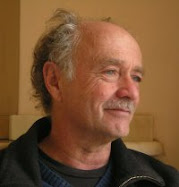
Minnesota writer Bill Holm died on Wednesday, February 25th, at the age of 65. Today there will be a service for him at St. Paul’s Lutheran Church, 414 E. Lyon Street, Minneota, MN, at 2:30 p.m. Poet Phebe Hanson will serve as an honorary pallbearer. I think the rest of us should take up that role, too, from wherever we happen to be: joining together to honor this big man, collectively bearing the burden of his loss.

I remember Bill – big exuberant, Icelandic enthusiast Bill – coming into Marly Rusoff & Co. Booksellers in Dinkytown, near the University of Minnesota campus in Minneapolis, back in the mid-70s when The Loft was in its infancy, a series of crowded gatherings upstairs. He was booming, beaming, instantly and always already friendly: a gregarious person comfortable in his own animal skin. Bill didn't seem to bother with neuroses: he moved right ahead to apprehend the world and then give it right back, with the help of Whitman-esque wisdom, salty common sense, leaping poetic northern lights, courage, curiosity, and Icelandic vodka.

Bill played the piano and had this to say about that: “I’ve started another project that pianists shouldn’t avoid for too long, and that is trying to play Chopin decently. I used to make fun of Chopin, but now, the more I play him, the better he gets.”

In the 80s he went to teach in China, then wrote a book called Coming Home Crazy: An Alphabet of China Essays. It's time to revisit that, and to explore Holm's many other books.

Here is an obit from Minnesota Public Radio, and a link to the Bill Holm website. Garrison Keillor once called Bill "the tallest radical humorist in the Midwest," which means something, coming from Garrison.

It seems uncanny that Bill died the week before Ian Parker's Letter from Reykjavík, "Lost," appeared in The New Yorker, in the March 9th 2009 issue. The article is about the recent economic crash in Iceland, the kreppa, or crisis resulting from extraordinary speculation on the part of a handful of bankers. We can only imagine what Bill must have thought about that.

There are many other tributes to Bill accumulating on the web, with the ripple effects of his departure from our small world of box elder bugs and black pianos, boats against an ice blue sky. You can see a short video of him reading a poem to school children about the death of Paul Wellstone, here at Mike Hazard's website for The Center for International Education. I wish I could be at Bill's service today, directly marking the passage of his great, generous soul.