Showing posts with label John Berryman. Show all posts

Tuesday, January 6, 2009

John Berryman Poetry Celebration


I just became a fan of John Berryman on facebook, and am so glad to see that he has hundreds of other fans (a modest 462 at this count). Andreas and I have been combing the web for his works, and so many have fallen into obscurity, just when we need Berryman the most. I believe there will be a Berryman revival.

So imagine my delight when I found the John Berryman Poetry Celebration on facebook, via actor Ben Kreilkamp. Ben has a letter in the on-line New York Times today, about the situation in Gaza. He recently played Herod (and a bison) in Natividad at In the Heart of the Beast Puppet and Mask Theater, during the Christmas season.

The party is coming right up, on January 9th, and I won't (alas) be able to attend. But I think we should all dedicate more time to having parties for departed poets. This one sounds amazing. One confirmed guest is Katherine Lanpher, author of Leap Days: Chronicles of a Midlife Move. Katherine used to be co-host of "The Al Franken Show" – I'm hoping the Berryman Party will help take her mind off the nerve-wracking Senate race crawling along in Minnesota.

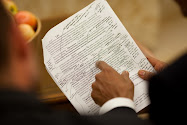
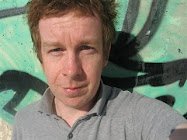
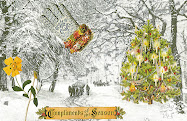
Here are the details about that party, given by Twin Cities photographer Sean Smuda (that's his photo with the flowers). Facebook calls it a global event.

My Friends,

Please stop by Friday January 9th at 10:30 pm for a celebration of poet John Berryman's life and work. Poets Paul Dickinson, Dessa, Dobby Gibson, actress Sally Wingert (of the Guthrie) Steve Marsh, myself, Johnny Swardson, Ehsan Alam, Juan Antonio del Rosario,Geoff Herbach and Jen March of Electric Arc Radio and others will work their way through his 77 Dream Songs. Carol Johnson's 1974 half hour Berryman documentary, "I Don't Think I Will Sing Anymore Just Now" will also be screened. This all takes place following Dobby Gibson's book release party for Skirmish, his latest collection of poems at the Loft (at 7pm).

Cheers, Sean Smuda

2948 Chicago Av S Buzzer #08

street parking or in the MN Jobs lot across Lake St

Beverages will be available for donation


Here is a video of Berryman reading in Dublin.


Sunday, November 23, 2008

Sunday Services

It's 9m at our little Indiana home Church of Beethoven... or Berryman. Teenagers catching up on their precious sleep. The sun is shining, but it is cold. Our solo services unfold, like the Sunday paper, pages of the New York Times. A trip to the co-op for milk, eggs and bread.

Musical selections throughout the day may include the "Mostly Live" CD by the Young@Heart chorus, and the new Killers CD. We're human here, and dancer, too.

But mostly silence. There is a memorial service this afternoon at Harmony School for Madeline Krause, an IU student who attended Harmony and acted in many plays at the Bloomington Playwrights Project. Maddie died of suicide a week ago Saturday, falling from the top of a parking garage. (Sadly, her death echoes that of Timothy J. Wiles, English professor at IU, co-founding participant in the BPP, who died a few years ago after falling off the Atwater Parking Garage.)

Maddie's too-early death may be part of what sent me to Berryman's Recovery, a very moving book, not least for never having seen completion. Prayers for those who struggle with depression, loneliness, and forms of addiction, seeking recovery and peace. Prayers for family and friends suffering in the aftermath of suicide.

My mother, poet Joyce Kennedy, sent this poem by Berryman, from his Eleven Addresses to the Lord:


Sole watchman of the flying stars, guard me


against my flicker of impulse lust: teach me


to see them as sisters & daughters. Sustain


my grand endeavours: husbandship & crafting.


Forsake me not when my wild hours come;


grant me sleep nightly, grace soften my dreams;


achieve in me patience till the thing be done,


a careful view of my achievement come.


Make me from time to time the gift of the shoulder.


When all hurt nerves whine shut away the whiskey.


Empty my heart toward Thee.


Let me pace without fear the common path of death.


Cross am I sometimes with my little daughter:


fill her eyes with tears. Forgive me, Lord.


Unite my various soul,


sole watchman of the wide & single stars.


Saturday, November 22, 2008

Recovery, by John Berryman


Addiction memoirs abound today, including The Night of the Gun by David Carr, media columnist and culture reporter for the New York Times. Carr recalls his years as a cocaine addict and dealer in the Twin Cities, admiting to having beaten his wife. After leaving his infant twin daughters in a freezing cold car one night (only to find them miraculously alive hours later) he was finally able to kick his habit, advance his career as a journalist, remarry, repair his relationships with his daughters, and set about to write this account. He interviewed people from his past, reflecting on the impact of his recklessness. (He also changed his physical appearance from stocky to gaunt, and it's a bit odd to see the number of recent photos of him on the web, holding what appear to be alcoholic beverages.)

Anyway, fair enough: Carr is a much better writer than the infamous James Frey, author of A Million Little Pieces, a book that sold millions of copies thanks to Oprah's endorsement. Frey was confronted by Oprah on national television after being exposed by The Smoking Gun for what they called his "fiction addiction." (Wouldn't that be an "addiction fiction"?) This set off a discussion of truth, lies, and authorial license that deserves better writing than that offered by Frey, whose prose style is atrocious and whose sensibility short on intelligence, insight, or inspiration. (I know, that was harsh.)

As Maia Szalavitz notes in a piece called "Why Former Addicts Dread Addiction Memoirs", the topic fascinates because it touches on free will, morality, neuroscience, sociology, psychology, and politics. It may also deal, as it does in Berryman, with the making of art.

Long before any of these recent books hit the shelves, the poet John Berryman wrote most of his only novel, Recovery; perhaps this was the first contemporary addiction memoir. In the character of Alan Severance, a stumbling, self-deprecating, self-aggrandizing writer, Berryman makes a heartbreaking effort to overcome both addiction and despair, submitting to a treatment center routine of 12-step encounter groups, compassion, and confrontation.

Recovery is fascinating for tracking the internal workings of a mind tuned to the frustrations and compensations of self-expression. It offers his painstaking attempt to make sense of the tragic dimensions of the past personal. Berryman was also grappling with religious issues, seeking a spiritual framework that would accomodate his capacious mind and enable him to more easily make the decision to surrender to a higher power. The Thunder Mouth Press edition of this book includes prefaces by Saul Bellow and Philip Levine, and an early story by Berryman called "The Imaginary Jew," published in The Kenyon Review in Autumn 1945.

Recovery is dedicated "To the Suffering Healers." The book is impossible to read without mourning the sadness of Berryman's suicide or gaining insight into the anguish of those who are caught within the physical and psychological torment of addiction.

And in light of all the fuss about recent disingenuous memoirs, I appreciated the wry opening note:

I don't write as a member of the American and international society, Alcoholics Anonymous (founded 1935), but as an author merely who has experienced certain things, witnessed things, heard things, imagined some. The materials of the book, however, especially where hallucinatory, are historical; all facts are real; ladies and gentleman, it's true.

Wednesday, November 19, 2008

The Church of Beethoven...or Berryman


My brother John Kennedy, of Santa Fe New Music, called my attention to this NPR story about the Church of Beethoven, in Albuquerque, New Mexico, founded by cellist Felix Wurman, who sometimes performs with Santa Fe New Music. Housed in an abandoned gas station along old Route 66, the Church of Beethoven offers an experience of music that goes beyond entertainment and the concert. It provides community, a spiritual experience, and "church for people who don't go to church." (I love the repurposed canoe that serves as signboard.)

The Santa Fe New Music site also explores community and the conceptual dimensions of music. It includes audio and video clips; if you head over there, you can catch a glimpse of what's new in New Music, filling your ears with beautiful sounds. John has been giving a lecture series at the Georgia O'Keefe Museum called "Beyond the Noise: Listening to Modern Music." The course is inspired in part by 2008 MacArthur “Genius” Award-laureate Alex Ross’ recent book: The Rest Is Noise: Listening to the Twentieth Century.

John suggests that writers could start a church of Berryman, and I've been wondering about that. I turned last night to my copy of John Berryman's unfinished novel, Recovery, in its 1993 Thunder Mouth Press edition. This book includes the 1973 introduction by Saul Bellow mentioned by Lewis Hyde, a spur for his argument that alcohol destroyed Berryman, dismantling his gift. Bellow claimed "Now came the poems. They were killing him." I think Hyde was very insightful to contest that.

Philip Levine's essay "Mine Own John Berryman", written in 1993, is a wonderful supplement to the novel, and to Bellow's picture of Berryman as his colleague at the University of Minnesota in the 50s. Levine describes in vivid detail the experience of being a student of Berryman the one time he taught a poetry writing class, at the Iowa Writers' Workshop in 1954. The portrait is of a man who "gave all he had to us and asked no special thanks. He did it for the love of poetry."

Monday, November 17, 2008

Lewis Hyde, on Poet John Berryman (and Berryman on William Carlos Williams)


Yesterday, while flipping through the New York Times Sunday magazine en route to "The Exit Interview" with Condoleezza Rice, I glanced upon the name "Hyde" on an earlier page, and thought "Wouldn't it be great if this was an article about Lewis Hyde?" And in fact it was: a piece by Daniel B. Smith called "What is Art For?" Okay, I'm an Ideal Reader for this kind of writing, and I'll return to it again in the future. For now, a focus on poetry.

I first heard of Lew Hyde way back in the mid-70s, when he wrote his provocative essay "Alcohol and Poetry: John Berryman and the Booze Talking." I just pulled it off the shelf to read it again. I remember being shocked at the time by the blunt tone – the short emphatic sentences rendering judgment, and the unambivalent assessment of Berryman as drowned in self-pity and self-abuse. The beginning of the essay reads like a pitch for Alcoholics Anonymous, an odd thing to find in The American Poetry Review in 1975. (But then Blake Edwards's brilliant film Days of Wine and Roses, starring Jack Lemmon and Lee Remick, came out in 1962, and it includes an outright pitch for AA, too. And now I'm wondering: will Don and Betty watch Days of Wine and Roses on the next season of Mad Men?)

When a student at the University of Minnesota, I often walked across the Washington Avenue Bridge, where Berryman pitched his body down. I tried many times to read Berryman's The Dream Songs, but they didn't fully capture my interest: they belonged to the legendary tragic figure, a chain-smoking bearded professor who stumbled through inadvertently brilliant humanities courses while intoxicated. Later I knew his daughter Martha, when she was in high school; we talked about writing, but never about her dad. (Here's an article about Berryman focused on Kate Donahue, his last wife, Martha's mother.)
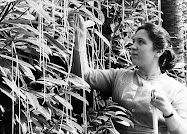
In 1993 Hyde wrote another piece called "Berryman Revisited: A Response," published in Recovering Berryman: Essays on a Poet. Ed. Richard J. Kelly and Alan K. Lathrop (Ann Arbor: University of Michigan Press, 1993). Both essays are vehicles for thinking about connections between alcohol and spirit, and for wondering about the role of alcohol in the lives of those many writers whose lives have not ended or proceeded well.

Here is Berryman's Dream Song 324, "An Elegy for W.C.W." It pays tribute to poet-physician William Carlos Williams, a writer who was famously capable of living an engaged and inspiring life, unburdened by the disease of alcoholism.

Henry in Ireland to Bill underground:
Rest well, who worked so hard, who made a good sound
constantly, for so many years:
your high-jinks delighted the continents & our ears:
you had so many girls your life was a triumph
and you loved your one wife.

At dawn you rose & wrote--the books poured forth--
you delivered infinite babies, in one great birth--
and your generosity
to juniors made you deeply loved, deeply:
if envy was a Henry trademark, he would envy you,
especially the being through.

Too many journeys lie for him ahead,
too many galleys & page-proofs to be read,
he would like to lie down
in your sweet silence, to whom was not denied
the mysterious late excellence which is the crown
of our trials & our last bride.