Showing posts with label Frankenstein. Show all posts

Monday, March 30, 2009

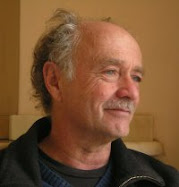
Freeman Dyson: Portrait of the Scientist as Civil Heretic


Yesterday's theme of the neighbor as Other, whether as foreigner or as the abject and rejected part of oneself – that which is prohibited and put out of view – is pervasive. It is something we encounter every day in our lives, so many times that we think almost nothing of it. It is all over the daily news (if we get the news and don't self-select it out): the suburban riots in France in 2005, issues of immigration, the war in Gaza over a contested strip of land. How do we appease the Other, give it space, draw the boundaries of prohibition?

The other Other theme in Frankenstein is that of the despised creation: the work of science or art that we feel compelled to make, despite unforeseen consequences that make us later regret dedication to it. The scientist Freeman Dyson, in an interview for the 1980 documentary "The Day After Trinity," referred to this when talking about nuclear weapons: “I felt it myself, the glitter of nuclear weapons. It is irresistible if you come to them as a scientist. To feel it’s there in your hands. To release the energy that fuels the stars. To let it do your bidding. And to perform these miracles, to lift a million tons of rock into the sky, it is something that gives people an illusion of illimitable power, and it is in some ways responsible for all our troubles, I would say, this what you might call ‘technical arrogance’ that overcomes people when they see what they can do with their minds.”

There was a fascinating profile of Dyson, "The Civil Heretic," in yesterday's New York Times Sunday magazine, written by contributing writer Nicholas Dawidoff. The print version included an image unavailable on the web, of drawings and writings made by Dyson as a child. Dyson's over-the-fence neighbor at Princeton used to be Julius Robert Oppenheimer, the father of the atomic bomb.

Looking at the NYT site now, I see that this was yesterday's most e-mailed article, asking the question: "How did Freeman Dyson, the world-renowned scientist and public intellectual, wind up opposing those who care most about global warming?" (Here is a link to an earlier piece on Dyson and carbon-eating trees, over at Boing Boing.) It had a broader reach than news about a vast spy system looting computers in 103 countries, a piece about the rapid growth of Facebook, or an essay about managing the queue at Netflix. It was more popular (understandably so) than a piece about the worst phone company in the world, Verizon, where I am an unhappy customer. (I can't wait to get out of Verizon prison: but that is another story.) There was a piece about Skype, too, as well as one about forging a link to the farmer who grows your food.

Sunday, March 29, 2009

Mary Shelley Meets The Happy Sunshine Family


The video by Ruby and Arielle of the The Happy Sunshine Family echoes Mary Shelley's story of the monster, who just wants to "be with his family."

Midway into this remarkable tale, the monster meets his creator, his twin, Victor Frankenstein. They are on the sublime summit of Montanvert, at the edge of a tremendous, ever-moving glacier, where the abhorred creation begs to tell his story: "Let your compassion be moved, and do not disdain me. Listen to my tale: when you have heard that, abandon or commiserate me, as you judge that I deserve."

Shelley's monster tells his story to his "father-creator," revealing his anguish, anxiety, and self-loathing. (The same self-loathing Victor describes throughout the book when despairing over his compulsion to create the monster in the first place.) He also reveals his poignant desire to be accepted, protected, and loved.

In the middle, most interesting section of Frankenstein, Shelley lays bare the interior life of the monster. He fully describes what it is like to be oppressed, excommunicated, judged on the basis of his appearance, and instantly, physically abhorred by human society.

Despite his own fear and revulsion on seeing his own image, he hides in a hovel attached to the cottage of several humans: a blind, kind father, and brother and sister Felix and Agatha. The monster painstakingly pieces together their story, feeling misery on their behalf. He comes to love them, calls them his Protectors, and embarks on a regime of dedicated self-improvement in hopes of becoming more fully assimilated and human.

First, he must teach himself to speak their language, listening through a chink in the hovel wall as Felix reads to his Arabian love, Safie, from Volney's Ruin of Empires. (There is a fascinating subplot involving the perils of marriage across European and Turkish cultural prohibitions.) Then he teaches himself to read from a parcel of remarkably relevant books found along the road – Milton's Paradise Lost, a volume of Plutarch's Lives, and Goethe's The Sorrows of Werther. He enjoys the happiest hours of his life while engaged in self-study hidden on the just other side of the living room inhabited by the unsuspecting family. He sometimes leaves them gifts of food or performs helpful tasks, clearing their pathway of snow or supplying them with fuel from the forest.

The monster hopes to eventually reveal himself to his Protectors and win their trust and affection. He is able to do so, finally, in an interview with the blind father, but when the others come home they respond with instanteous horror. Felix strikes him "with supernatural force," and so the monster quits the cottage, despairing of ever winning a welcome entry to the home of his neighbors. When they abandon the cottage, in fear, he burns it down.

Ruby and Arielle have captured the frame of this (yes, disturbing) story in their video. The Playmobil® characters wear perpetually serene Happy Sunshine smiles – even the rejected twin, who "triumphs" in the end by initiating the self-destruction of his family. It's an arresting tale, and no moral is imposed. It taps into an archetypal theme: that of loving (or fearing) your neighbor as both yourself and Other. The twin in the basement is the Return of the Repressed.


Saturday, March 28, 2009

Frankenstein and The Happy Sunshine Family


Daughter Number Three recently posted a YouTube video made by her daughter Ruby and her daughter's friend Arielle, called "The Happy Sunshine Family." I've included it here: it's a family romance complete with "wicked" twin locked in a cage, like poor Harry Potter under the stairs at the Dursleys, or the many dogs – wicked or not – who periodically go back to the cage in their owner's homes.

This fascinating, morbid trope goes all the way back to fairy tales, and then to one of the world's most notorious anti-heroes, Frankenstein, patron saint of the misunderstood and encaged/enraged Other.

I read Frankenstein, the novel, for the first time a couple of years ago, and as a result became obsessed with everything having to do with Mary Shelley. This kind of took me by surprise, as I don't consider myself a fan of the horror genre. What intrigued me was the notion of Frankenstein as outsider who wants to become a member of the "happy sunshine family" but who is unequivacably unwelcome to them. Watch the video, and we'll pick up on the comparisons tomorrow. Here is the frontispiece to the original edition of the book.

We were bored, so...... we created a somewhat disturbing movie using playmobiles. Yep.


Wednesday, March 25, 2009

25 Random Things: F-Words


Another of my 25 random things, as I work through the alphabet, a second post for the letter "f". (God bless the alphabet(s), by the way!) A few important f-words:

Fresh and free-range: I like my ideas and enthusiasms much like my food – fresh and free-range. I've never been able to constrain my wide-ranging interests, try as I have at times to delimit them. Hence this website, where I roam among them, drawing connections and following their lead. Thanks for indulging me, dear Ideal Readers!

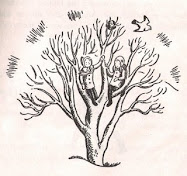
Feminist: Yes, without a doubt. Beyond the waves of 1st, 2nd or post-feminist demarcations, I know that my life has been improved immensely by the efforts of our feminist forebears, women who brought us the vote, choice, more job security, and the freedom to speak out on domestic, personal, and political issues. The best men are unapologetic feminists, too. The wonderful free-range tree of life here ("Woman with Fan") is by feminist artist Susan Bee.

Fragrance: The people who I think deserve at least one shot at Keith Olbermann's "Worst People in the World" award are those who add synthetic fragrance to everything under the sun, including body care and household cleaning products. I'll be ranting about this again, as time goes by. Essential oils, good. Fragrance, deadly.
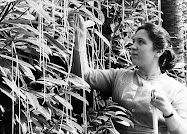
Far-flung family and friends: a fascinating trope. I'm very connected to my free-range far-flung family and friends, even though we often lack sufficient face time.

Frankenstein: No f-word list is complete without him, patron saint of the Other.

facebook: And finally, I guess I really ought to add facebook, as I'm a relatively new facebook afficionado. I resisted for a long time, and then capitulated when my friend Lisa assured me that "Facebook is all about fun and jack-assery." Whew, who knew? Just don't fling me any Lil' Green Patches – even I know they won't really save the world.

France: Ah, and France. Home of my favorite philosophes, Jacques Derrida and Jean-François Lyotard. For a magnificent glimpse of daily life in Paris, visit the web log of photographer Ricardo Bloch, Amphibious Andromeda.