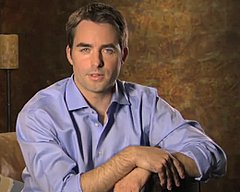
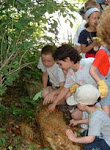
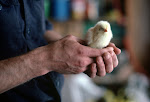
This video hints at why I so appreciate "Jamie Oliver's Food Revolution". (Please click on that link and take a few seconds to signal your support for healthier eating.) I've had similar experiences with kids in elementary schools, and it is always surprising to learn how little they know about fruits and vegetables. Wouldn't a curriculum with food at its thematic center have cross-disciplinary value in life skills, health, social studies, history, reading, writing, math, science, and art? We all have to eat. (Oh, and economics, too.)
Every March, I serve Fruits of the World to fourth graders at the Lotus Blossoms Bazaar, in a booth sponsored by my food co-op. I'm shocked by how many have never tasted a kiwi, a mango, or even a mandarin orange, grapefruit, or tangerine. Some kids can't pull themselves away from the booth once they get a taste of real fruit. They bounce back all day long with a twinkle in their eyes, letting me know they are ready for another sample. Bounce, twinkle: fruit energy is palpable.
I think children have a craving for real food. We use their so-called aversion to new tastes as an excuse for under-nourishing them, and it's just laziness (and selfishness – greed) on the part of adults. We have a responsibility to do better, and Jamie Oliver is pretty adamant about that. It's so good to see this on tv. Can it make a difference? That's up to us.
Saturday, April 17, 2010
Friday, April 16, 2010
Jamie Oliver's Food Revolution takes aim at school lunches

It's a Friday night thing for me now: checking in with Jamie Oliver's Food Revolution, the reality tv show set in Huntington, West Virginia, a place Oliver refers to (somewhat inaccurately) as "the fattest city in the fattest country in the world."
Tonight he is meeting with hospital representatives, making a pitch for money. They point out how damaging it may be for Huntington to be identified with obesity. But Oliver is vehement about bringing change to the town, teaching people how to cook, and building a common commitment to fresher foods.
The show is sponsored in part by Wal-Mart, Bene-fiber, and Scott's Lawn Chemicals, so one has to wonder just how progressive its message can be. Cynical perspective: it's a green-washing opportunity for advertisers. On the other hand, I am convinced by Oliver's energy and the adamant passion he brings to the seemingly impossible task of improving school lunches. He boldly jumps in, takes risks, uses his foreignness to his advantage, and makes direct personal in-your-face appeal to those people who resist his efforts. The goal is "fresh food, cooked from scratch, on-site."Jamie Oliver's Food Revolution brings to a broad mainstream audience bold criticisms of sugared milk, trans-fats, and what he calls "horrible processed foods." It exposes the the bureaucratic issues and "state regs" that hinder change: the notion that kids need calcium from milk and will only drink it if it's altered with sugar and strawberry or chocolate flavors, the idea that french fries are a healthy vegetable, and so on.
Learn more at the site for the show, and while there, sign the petition! It's interesting to see where the signatures accumulate: still only 5872 from Indiana so far.
Thursday, April 15, 2010
Landscape Re-Mix at the Walker Art Center
Last weekend it was possible to drop off electronic waste at Indiana University to have it hauled away to be recycled. I read one comment about how someone dropped off an overhead projector: "I hadn't seen one of those in years."
Watching this very charming video, made by the landscape design studio ROLU, of a Designing Play! event at the Walker Art Center in Minneapolis, made me want to acquire an overhead projector of my own. In the hands of artists, the old technology tools can be remixed to very useful, beautiful, and contemporary effect. The tool is always only what we make of it.

The music is called "Coloring" by Lullatone. Lullatone "makes loopable lullabies for babies (and adults)" and has an album called Songs that Spin in Circles. If you click here to go to their Raindrop Melody Maker, you just might get lost in a splish splash of happiness and bliss.
This event look place last February, so there is snow outside those windows. Viewed through our windows today, the redbuds and apple trees are blooming. But who wants to be inside, looking out? Spring escapes into the landscape, the Earth having spun its birth circle again.
Many thanks to Nina Hale for tweeting this link.
Watching this very charming video, made by the landscape design studio ROLU, of a Designing Play! event at the Walker Art Center in Minneapolis, made me want to acquire an overhead projector of my own. In the hands of artists, the old technology tools can be remixed to very useful, beautiful, and contemporary effect. The tool is always only what we make of it.

The music is called "Coloring" by Lullatone. Lullatone "makes loopable lullabies for babies (and adults)" and has an album called Songs that Spin in Circles. If you click here to go to their Raindrop Melody Maker, you just might get lost in a splish splash of happiness and bliss.
This event look place last February, so there is snow outside those windows. Viewed through our windows today, the redbuds and apple trees are blooming. But who wants to be inside, looking out? Spring escapes into the landscape, the Earth having spun its birth circle again.
Many thanks to Nina Hale for tweeting this link.
Wednesday, April 14, 2010
No Impact Week begins on April 18th
There's a No Impact Week coming up, starting Sunday April 18th. I won't be able to participate this week (I have some exciting travel plans that coincide exactly with the challenge), but I'll be watching the blog when I return, and will probably try it week after next.
I know that for me this experiment will work much better as a result of having seen the film No Impact Man, so if you are interested in the challenge, I'd recommend starting there. Once you register, which you can do from a link at Colin Beavan's blog, you'll be able to download ("but don't print out") a guide to five daily steps, with a page of ideas and resources to help you with that day's challenge.
Day one, Sunday, is a reflection on consumption. To kick off, the project recommends watching Annie Leonard's video The Story of Stuff. That's another thing I've wanted to do. One nifty aspect of No Impact Week is that it rounds up resources you can explore in blog-space conversation with a cohort of others engaged with the project. There are some face-to-face events in New York City, and you can become a local No Impact ambassador in your own community too.
Cool! Regarding consumption: one thing I started to do this past January was aim for at least four Buy Nothing Days per week. This is an interesting way to develop awareness about spending. When tempted to buy something, anything (even an apple) I weigh it against the thrill of adding another Buy Nothing Day to my calendar.
I try to cluster shopping trips onto particular days, making it easy to then track purchases. For example, I might go to the co-op for groceries on a day when there is a farmers market next to it, so I can consolidate my shopping. I'll try to fill the car with gas that day too. If I'm aiming to Buy Nothing for five more days, I'll be more conscious of how much gas I'm using, cutting back on aimless or extraneous trips. This is a great way to curtail impulse purchases of all kinds, creating more consciousness around spending.
Just a statistic from The Story of Stuff, found in the No Impact Week guide: "Ninety-nine per cent of the stuff we harvest, mine, process, transport – ninety-nine per cent of the stuff we run through this production system is trashed within six months." Can this really be true? It's a shocking statistic. Every little bit less is something I can easily buy into.
I know that for me this experiment will work much better as a result of having seen the film No Impact Man, so if you are interested in the challenge, I'd recommend starting there. Once you register, which you can do from a link at Colin Beavan's blog, you'll be able to download ("but don't print out") a guide to five daily steps, with a page of ideas and resources to help you with that day's challenge. Day one, Sunday, is a reflection on consumption. To kick off, the project recommends watching Annie Leonard's video The Story of Stuff. That's another thing I've wanted to do. One nifty aspect of No Impact Week is that it rounds up resources you can explore in blog-space conversation with a cohort of others engaged with the project. There are some face-to-face events in New York City, and you can become a local No Impact ambassador in your own community too.
Cool! Regarding consumption: one thing I started to do this past January was aim for at least four Buy Nothing Days per week. This is an interesting way to develop awareness about spending. When tempted to buy something, anything (even an apple) I weigh it against the thrill of adding another Buy Nothing Day to my calendar.
I try to cluster shopping trips onto particular days, making it easy to then track purchases. For example, I might go to the co-op for groceries on a day when there is a farmers market next to it, so I can consolidate my shopping. I'll try to fill the car with gas that day too. If I'm aiming to Buy Nothing for five more days, I'll be more conscious of how much gas I'm using, cutting back on aimless or extraneous trips. This is a great way to curtail impulse purchases of all kinds, creating more consciousness around spending.
Just a statistic from The Story of Stuff, found in the No Impact Week guide: "Ninety-nine per cent of the stuff we harvest, mine, process, transport – ninety-nine per cent of the stuff we run through this production system is trashed within six months." Can this really be true? It's a shocking statistic. Every little bit less is something I can easily buy into.
Tuesday, April 13, 2010
Real Life in the age of the Interweb
Tom Tomorrow's clever commentary on decorum distinctions between so-called "Real Life" and the Internet, published at Salon. Anonymity makes it so easy to be rude, our attention spans are short, and empathy can be an elusive commodity.
On the other hand, it's also a place where you may just experience the kindness of strangers or distant friends, as I have so frequently here. Thanks for clicking over to elenabella!
Monday, April 12, 2010
Remembering my grandmother Mary

It's April 12th, the birthday of my grandmother Mary, who would have been 103. She died at age 97; it doesn't seem that long ago. I have many memories of this grandmother, but had no photos of her in my computer. Mom just sent these: Mary's high school graduation picture (at age 16), and one of the last pictures taken, of Mary in her 90s on the occasion of an all class reunion in Milton, North Dakota. The last alive from her graduation class (and, eventually, the last remaining sibling in her family), Mary was the grand marshall of the parade they had for the celebration. My mother observes: "So both of these photos are school photos!"I think of her quite often, especially at this time of year. Lilacs in bloom remind me of her, as does the Easter season.
Mary managed to live on her own until the very last weeks of her life, keeping her sharp mind, sense of humor, and interest in other people. She made hundreds of gifts during her lifetime, knitting and crocheting, embodying a sense of both thrift and generosity. She was very practical, fair, and engaging, working as an English teacher for many years. I miss her, and continue to feel her presence in my life. This late photo brings with it the tone of her voice and the sound of her laugh.
Sunday, April 11, 2010
No Impact Man has big ripple effects

Just home from two screenings of No Impact Man, the film featuring the "no impact family" of Colin Beavan, Michelle Conlin, and their endearing, adaptable daughter, Isabella. If you read my post of the other day, you'll know I was somewhat apprehensive about the eco-extremity of this project: a year of only locally grown food, no electricity, no public transportation, no toilet paper, and so on – from the heart of New York City, no less.
It's a wonderful movie, and I'll make a few observations and comments.
First, the toilet paper. I don't think it's as hard as one would think to make a switch to something else. I just searched for more about cloth toilet wipes, and found a good post from way back in 2006, at Walk Slowly Live Wildly (where I found the photo on the right). No Impact Man doesn't dwell much on the issue of toilet paper, though it shows the couple speculating about the implications of going without, feeling uneasy about assumptions people may make about hygiene. It's the lack of toilet paper that got picked up as a headliner in the New York Times when the No Impact project was publicized there. (I guess the family's solution involved only water and air drying.)
The film doesn't talk much about the family dog, so I was curious about the experiment with regard to pet ownership. It was a great project to undertake with this particular two-year-old, an amenable child who demonstrates wonderful flexibility. The scene when Beavan explains to Isabella that they will not be using toilet paper is worth the price of admission – a lovely inversion of the conversation most parents have with kids of that age.
I was relieved to see them ease into the project in phases, waiting a while to turn out the lights. Both parents struggle with the project and discuss it in revealing, honest conversations. Michelle's ambivalence is very understandable and her story holds the film together; she comes to find more value than expected in the changes that occur as the year goes by. She talks about how long the days become once the lights are out and the air conditioner off in summer, and she huddles under the covers in winter, reading by candlelight. She looks forward to story time with her daughter again, aided by a bedside lamp.
The film made me think about how I washed all of my clothes for one year in the bathtub in Ireland, stomping on them much as the family does in this show, and hanging them on wooden racks, where they would dry slowly over a number of days. (Hanging them outside on the clothesline on the roof resulted in coal-speck-covered clothes that were dirtier than before.) I huddled under the comforter, too, heating one room at a time.
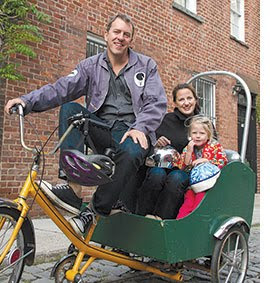
Beavan is so committed to the project, without being too overbearing, and there is a bit of play in their no impact "system", humanizing the film. They are not purists, but are giving us an intimate glimpse of the messiness of their lives. Their apartment appears somewhat chaotic, with books piled high on the shelves. They aren't minimalists living an inaccessible aspirational life, but parents with work to do and the complications of competing desires.The couple negotiates and explores the value of their decisions, showing us both frustration and joy. They aren't prescribing specifics so much as challenging us to imagine different, more creative ways to live, whether in a large city or elsewhere. It's a great test of both object and human relations, showing the unexpected benefits that may occur with a conscious step away from excessive consumption. The project asks us to ask: what do we truly want and need?
Saturday, April 10, 2010
Soup Bowl Benefit 2010 captured on video by Duane Busick

Videographer Duane Busick (whose community videos I've mentioned before) has made another wonderful short video, about the annual Soup Bowl Benefit in the town where I live (just click that link to watch). Phil, who works at Bloomingfoods East, organizes the kitchen for this highly successful, soul-warming occasion.
I like what potter Karen Green Stone (shown in the photo below at the microphone) says in the video about the value of one particular bowl – a tangible object made from ancient clay, shaped by an artisan, fired in the kiln of a friend, finally selected by a Soup Bowl visitor. Here's more history, from Duane:
16 years ago Robert Meitus and Carrie Newcomer brought an idea for a community fundraiser home to Bloomington, Indiana. That idea became the Soup Bowl Benefit, now one of the most popular events in Bloomington, Indiana, providing the largest contribution to the Hoosier Hills Food Banks annual operating budget. Over 30 local artisans contribute hundreds of handmade pottery bowls, local restaurants donate an array of delicious soups, and local bakers provide bread and cookies. Carrie Newcomer's song "If Not Now" introduces the video.Here are photos from a previous Soup Bowl, capturing some of the spirit of this annual occasion. Now we can watch the video for the more complete story – thank you, Duane!
Friday, April 9, 2010
Google Imitates Jackson Pollock
Shortly after writing about Pi Day on Sunday March 14th, I discovered an essay in the Sunday New York Times T magazine called "Google's Doodles." The author, Alice Rawsthorn, talks about the Google tradition of creating day-specific logos, and the possible broader implications for branding and design. Google, she argues, pushes against the "consistency imperative" (my words) that typically rules under Apple/Nike-style branding. Instead, many of its day-specific logos seem casual, or even amateur in their execution. Yet they fit, somehow, under the wide sweep of the Google identity.
The image used for that article, courtesy of Google, is a take on a Jackson Pollock painting. Of all the day-specific Google logos, this more subtle one is my favorite. It reminds me of a Smithsonian magazine article by Henry Adams, from November 2009, about his wife Marianne Berardi's discovery of a hidden Pollock signature in the 1943 painting Mural. Because the letters in both images are so obscured, they evoke the very act of "searching." Rev up your search engines, and look carefully behind the lines.
Labels:
Alice Rawsthorn,
Google,
Jackson Pollock,
New York Times
Thursday, April 8, 2010
Managing the many human obligations – with help from a spring meditation

My mind is drawing a blank: good for a Buddhist, bad for a blogger. Actually, my head is way too full: corralling many details. And our basement flooded in last night's torrents of rain, so we literally had to sweep water down the drain, under the ground. Ground water. It's an interesting form of zen practice.
How to be mindful when you have a head full of strands to connect? That's the challenge of our time, but probably of earlier times, too, in different ways. Wanting to empty the head, the cup, the vessel, the calendar, in order to fill it with something fresh. To experience completion and calm. To tap into the flow state of mental wonder and emotional beauty. To find time to reset.
What do you do – to pause, complete, move on, renew, manage the many human obligations? Give me a tip...
••••
In the meantime, voting closes today over at SAFE: Soap Artisan Friends of Etsy, where there is a poetry writing contest going on. Soapmakers have written poetry in the hopes of scoring some soap supplies. I love this poem by Laura Natusch of Urban Eden; run over there and give her a vote! (Here is a little "How to Vote" tutorial: First you click on comments. Then you post a comment saying who you vote for. You'll have to do the word verification thingie. And then – this might be the tricky part – you need to choose an identity. This was easy for me because I have both a blogger account and a google account. If you don't, you'll have to register to be able to post. That involves choosing an online identity and giving them an e-mail address – so they know it's not the same person voting more than once. If you've ever made a comment here at elenabella, you're all set up: just use that process. If you are new to this, once you vote over at SAFE, you'll be all set to join the comment gallery over here – which would be terrific!)An interesting thing about switching to only bars of handmade soap – not only are they wonderful for your skin, but they seem to last much longer than those liquid soaps in plastic dispensers. I see them as good luck talismans for self and household care. Maybe for mindfulness, too, especially when combined with meditations such as the one below.
Gardener's Poem:The Week Before Easter
Walking up Mountain Avenue
With my green plastic watering can,
I head towards the FRESH community garden,
Passing the abandoned pickle factory
And the stoop of a white, wind-chimed two-decker
Where two girls on cell phones
Unfurl their bare arms.
Salsa from the Super Fiesta Market
Mingles with sparrow song
And I think of the squirrel who, earlier this morning,
Raided my compost pile, burying her face
In an avocado with such bliss
That, reading the sign in front of the Madry Temple Church,
I can almost believe
No bunny loves you like Jesus.
Maybe today the pac choi will have sprouted?
Dandelions muscle their way through cracked sidewalks.
Forsythia swells yellow
And when, in my raised bed I find
Not pac choi, but pea seeds
Wrinkling their noses in the unexpectedly dry air,
I tuck them back under their blanket of soil,
Telling them, "Hush. Be patient. Wait
'Til you see what's coming."
Laura Natusch
With my green plastic watering can,
I head towards the FRESH community garden,
Passing the abandoned pickle factory
And the stoop of a white, wind-chimed two-decker
Where two girls on cell phones
Unfurl their bare arms.
Salsa from the Super Fiesta Market
Mingles with sparrow song
And I think of the squirrel who, earlier this morning,
Raided my compost pile, burying her face
In an avocado with such bliss
That, reading the sign in front of the Madry Temple Church,
I can almost believe
No bunny loves you like Jesus.
Maybe today the pac choi will have sprouted?
Dandelions muscle their way through cracked sidewalks.
Forsythia swells yellow
And when, in my raised bed I find
Not pac choi, but pea seeds
Wrinkling their noses in the unexpectedly dry air,
I tuck them back under their blanket of soil,
Telling them, "Hush. Be patient. Wait
'Til you see what's coming."
Laura Natusch
Labels:
blank state,
flood,
human obligations,
Laura Natusch,
mindfulness,
Urban Eden
Wednesday, April 7, 2010
Happy Birthday, Johno! Peeper sounds abound in April

It's the birthday of my brother John, so here's a shout out to him: Happy Birthday, Johno!
I've always thought of April 7th as lucky, marked by his birth in Albert Lea, Minnesota, early in the morning on a spring day, back when I was 7 years old.
April is National Frog Month, and so I went in search of some images for John, whose daughters are fond of frogs and toads. The Smithsonian website has a good collection of amphibians.
A number of facebook friends posted this collective poem. One comment read: "Somewhere I have a haiku about daffodils as the sound of peepers made visible."
I'm lifting their words for a first blog publication, crediting the authors below. A little gift for my bro, musician with a keen ear for natural sounds and peeper songs. Thank you, facebook friends... And hey, poets: weigh in and tell us just how you wrote this poem!The peeper frogs of April nights
sound like Spring.
Exactly!
They sound
the way the tiny
fat buds on the tree branches look,
and the way the first whiff of thawing grass
smells and like a friendly
alarm clock for your sense of possibility
after the long huddle of winter. I love peepers.
I would wear one as a brooch
if I could.
They sound like
Nothing else.
Music to my ears!
I always wave wildly to them
but I can never tell if they wave
back. So tiny.
Like the stars whistling for the comets
to come home. Like tulip tree fingers
ttrumming harp strings of rain.
Brooch indeed!
Hat brims of peeper songs
spilling over in the dark.
by Julia Dadds, Chuck Rogers, Carolyn VanderWiele, Nell Weatherwax, Melodie Hudson, Lisa Wheeler-Lovell, Diane Kondrat
Tuesday, April 6, 2010
The Eco-Extremity of 'No Impact Man'

I have to admit, I've been somewhat skeptical about No Impact Man: the movie, the book, the blog, the hefty no-impact apparatus. Maybe it's the hype about the Prada-loving wife. Maybe it's apprehension about people who seem too eco-aggressive (while their egos are clearly high impact). Nonetheless, I'm curious. So I helped arrange a special screening next Sunday, at the Buskirk-Chumley Theater here in Bloomington, Indiana.
I haven't yet seen the movie, but it has gotten a good bit of attention, with more screenings this month around Earth Day. Lower impact lifestyles are all the rage right now – but what does it feel like to really adopt one? Are they sensible, or simply sensationalist?
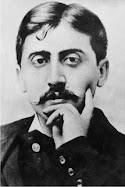
Whether you are eco-conscious or just eco-anxious (or in a state of eco-denial) you might also be curious about Colin Beavan, a self-described “liberal schlub who got tired of listening to himself complain about the world without ever actually doing anything about it.”
Several years ago, in November, 2006, Beavan began a year-long “No Impact Project” in which he, his wife Michelle Conlin, and his then two-year-old daughter (and their four-year-old dog) went off the grid, attempting to live in the middle of New York City with as little environmental impact as possible.
No Impact Man tells the story of that year: its challenges, humorous moments, and the difficult choices demanded by a lower impact lifestyle. The rules of the game were: no more electricity, no more automated transportation, no more non-local food, no more conspicuous consumption. (There’s even something in there about toilet paper.) Begging the question: can you do this kind of thing without driving yourself or your family crazy? The goal was to attract broad public attention to a range of pressing environmental issues – food system sustainability, climate change, water scarcity, and materials and energy resource depletion.
If you’ve ever wondered how far your should stretch your own lower-impact efforts (or rolled your eyes when a relative or friend suggested using a solar oven instead of the gas grill), you might enjoy this vicarious plunge into eco-extremity.
No trash, no toxins in the water, no elevators, no subway, no product packaging, no air-conditioning, no television...the list goes on. You can learn more about how the family is living today at Beavan’s blog. And if you live in or near Bloomington, please join me on Sunday April 11 at the BCT! (Special pricing for members of Bloomingfoods.)
Monday, April 5, 2010
Speaking of orchards, here's 'Real Homegrown Spaghetti'
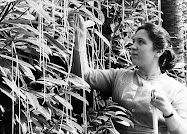
Speaking of orchards: my brother passed along this charming video, with a note that it was shown on April 1st in Jazzie's school. If you've ever wondered where the very highest quality pasta comes from, now you know!
Here is more information about this elegant little video, as well as access to a higher quality version of the segment:
On April 1, 1957 the British television programme Panorama broadcast a three-minute segment about a bumper spaghetti harvest in southern Switzerland. The success of the crop was attributed both to an unusually mild winter and to the virtual disappearance of the spaghetti weevil. The audience heard Richard Dimbleby, the shows highly respected anchor, discussing the details of the spaghetti crop as they watched video footage of a Swiss family pulling pasta off spaghetti trees and placing it into baskets. The segment concluded with the assurance that, For those who love this dish, theres nothing like real, home-grown spaghetti.
The Swiss Spaghetti Harvest hoax generated an enormous response. Hundreds of people phoned the BBC wanting to know how they could grow their own spaghetti tree. To this query the BBC diplomatically replied, Place a sprig of spaghetti in a tin of tomato sauce and hope for the best.
To this day the Panorama broadcast remains one of the most famous and popular April Fools Day hoaxes of all time. It is also believed to be the first time the medium of television was used to stage an April Fools Day hoax.
Since 1955 Panorama had been anchored by Richard Dimbleby, whose authoritative, commanding presence had made him one of the most revered public figures in Britain. If Dimbleby said it, people trusted that it was true. Which is one of the reasons why the spaghetti harvest hoax fooled so many viewers. His participation lent the hoax an air of unimpeachable authority.
Almost no one else at the BBC knew about it. The segment was not mentioned at all in the pre-transmission publicity handouts.
The line-up for that days show included a long segment about Archbishop Makarios, leader of the Greek Cypriots, and a clip of the Duke of Edinburgh attending the premiere of the war film The Yangtse Incident.
The second-to-last segment was about a wine-tasting contest, and then it came time for the spaghetti harvest.
Dimbleby, sitting on the set of Panorama, looked into the camera and without a trace of a smile said: And now from wine to food. We end Panorama tonight with a special report from the Swiss Alps.
The screen cut away to the prepared footage. When it was all over, Dimbleby reappeared and said, Now we say goodnight, on this first day of April. He emphasized the final phrase.
Panorama never attempted another April Fools Day spoof, despite numerous calls for a sequel. However, the hoax did inspire a number of similar stunts in its honour.
This film footage is from the Archive Collection held and administered by the Alexandra Palace Television Society: APTS ~Preserving the televisual past for the digital future.
Sunday, April 4, 2010
Happy Easter! A Community Orchard is in the works
This glorious image also came from Lois, on the day I purchased a cherry tree to plant in our yard. She writes:
Here in Bloomington, the magnolias are in full flower. And we are trying to win a community orchard! Here is the scoop on that effort, started by Amy Countryman, mother, farmer, and student in the IU School of Public and Environmental Affairs. YOU can help us with a simple voting process. Go to the site mentioned here, and click on VOTE at City of Bloomington Parks and Recreation Department. Just repeat once per day until the end of April. (! I know, it sounds like a lot to ask.)
As you can see, there is a lot of enthusiasm and excitement about this project. And, as my friend Jane put it, the voting process is "very testosterone-y!" We are currently in the nail-biting number one position, with one close challenger.
In Bloomington, Indiana, our budding community orchard is about the future. It is about leaving a legacy for generations to enjoy. But it is also about right now. It is about finding others who share a vision of abundance and coming together to make one patch of the earth a better place for everyone. The orchard will contribute to Bloomington’s food security, inspire joyful community engagement, and educate citizens while making sustainability delicious.
To ensure that fruit from the trees will reach those in need, Bloomington Community Orchard is partnering with the Hoosier Hills Food Bank Gleaning Program, which harvests surplus crops on local farms to feed those who are hungry. Strong traditions of community gardening already exist in Bloomington, offering educational opportunities; free, fresh, nutritious food; and beauty for all to enjoy. We are ready for our Community Orchard. All we need now are the trees.
Having enjoyed "April in February" here in the Pacific Northwest, we are now being treated to "February in April" and are confused as to which of the two months is actually crueler. But the cherry trees are in bloom, and "wearing white for Easter tide."
Here in Bloomington, the magnolias are in full flower. And we are trying to win a community orchard! Here is the scoop on that effort, started by Amy Countryman, mother, farmer, and student in the IU School of Public and Environmental Affairs. YOU can help us with a simple voting process. Go to the site mentioned here, and click on VOTE at City of Bloomington Parks and Recreation Department. Just repeat once per day until the end of April. (! I know, it sounds like a lot to ask.)
As you can see, there is a lot of enthusiasm and excitement about this project. And, as my friend Jane put it, the voting process is "very testosterone-y!" We are currently in the nail-biting number one position, with one close challenger.
Your Community Orchard Team is in full force and we need your help!
Vote online and play a simple, yet critical, role in winning Bloomington a grant for a FREE FRUIT ORCHARD which will provide free fruit to the entire community. *We need to vote through April 30th.
Vote for the Bloomington Community Orchard at Communities Take Root EVERYDAY until April 30 (11:59 p.m. PT). Make it your home page and make it simple for yourself to make a major contribution.
For more information about the Bloomington Community Orchard visit us online at
Facebook. For more information about the free trees and other support this grant will provide for our Orchard, please see the "participant submission" and "application" documents which will soon uploaded to our Facebook page.
In Bloomington, Indiana, our budding community orchard is about the future. It is about leaving a legacy for generations to enjoy. But it is also about right now. It is about finding others who share a vision of abundance and coming together to make one patch of the earth a better place for everyone. The orchard will contribute to Bloomington’s food security, inspire joyful community engagement, and educate citizens while making sustainability delicious. The City of Bloomington has offered support and a spacious site adjacent to our largest and oldest community garden, a public park, and the YMCA. The first public meeting for the orchard, held in February at City Hall, was standing room only. Participants are eager to put their expertise, resources, and physical labor into the creation and maintenance of the public orchard. Work groups are establishing the administrative and operational structures needed to allow the orchard to thrive. Bloomington's People's University is offering a low-cost course on orcharding to create a core of educated volunteers to care for the trees.
Saturday, April 3, 2010
Happy Birthday, Bü, with both pink and blue

It's the birthday of my father-in-law, Friedrich: happy birthday, Bü! Last year I posted one of my favorite family photos, a picture of Friedrich (on the left) with his older brother Peter. (He looks so much like Jack in this photo.) They were the two oldest boys in a large family, born in the late 20s in Germany.
Bü's birthday coincided with a message from Lois, a friend of my mother's (who, like my mom, spent her childhood and youth in North Dakota). She shared this, on the topic of color coding for infants:
Your blog on the color pink reminds me of my bewilderment when I first paged through my Aunt Sophy's scrapbook from the 1920s. It contained all sorts of memorabilia as well as yellowing newspaper fragments relating to engagements, weddings, and births among her long gone circle of friends. At first, I felt mildly embarrassed for the printers in North Dakota who obviously hadn't a clue that pink was for girls, blue for boys--or perhaps they were color blind.
My cousin Rodney's birth announcement (ca. 1926) [posted at the right] shows a baby swaddled in a pink-flowered blanket, and tucked into a pink basket! There were several announcements, and the color scheme was consistent. At last I went to the Internet and found that until about 1950, pink, as a watered down shade of red, a manly color, was assigned to boys; blue was considered more delicate, as well as being the color of the Virgin's robe, and hence more suitable for girls. I was so pleased to have the job printers of my home state vindicated! Lois also sent this photo of Pulmonaria, noting that its pink buds open to blue blooms: "best of both worlds." Thank you, Lois!
One little p.s. – it's so lovely to receive messages via email from readers, especially when they include images and observations like this one. If you have a topic, link, video, or story that reminds you of with a blogpost here, please don't hesitate to contact me: ellenkmichel[at]gmail[dot]com.
Labels:
Freidrich Michel,
gender stereotyping,
Jack,
Lois,
pink
Friday, April 2, 2010
Obama's notes: A lesson in expository writing
Not everyone does all of their editing on a wiki page or in the computer.
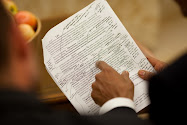
This image of Obama making edits to a speech comes from Jocelyn Hale, executive director of The Loft Literary Center. It reminds me of what we used to say in composition rhetoric classes back when I taught expository writing while going to graduate school at the University of Minnesota:
• Put everything down and then begin rearranging segments and replacing words
• If it is awkward or grammatically incorrect, pause, step back and rethink your idea
• You discover what you think as you shape your thoughts and research into words on paper
• You may surprise yourself with a changed opinion
• You refine your ideas as you craft and reshape your drafts
• Sometimes it's good to step back from the computer and and add some handwritten revisions
• Think about various contexts for your text: how does it carry over?
• Try reading your piece aloud
• Share it with someone else to see if it works for your intended audience
Thursday, April 1, 2010
Update on the Obama Poetic Language Initiative
It's the second year of the Obama Poetic Language Initiative, a little known act signed into law by the President early in his administration, without the expressed approval of Congress. It may be a questionable use of taxpayer money – but, as the keeper of a blog on the poetics of daily life, I feel inclined to support it nonetheless. I admire Obama for keeping a promise he made to supporters of The Loft Literary Center, back in Minnesota in the early days of his campaign.
As you may recall, Obama charged the nation's poet laureate, Kay Ryan, with asking living poets to go back and expunge negativity and obscurity from famous poems of the past, with the goal of making them more accessible and transparent. For those of you who are critics of wasteful spending: to his credit, Obama made it very clear that the poets are not to be paid for their efforts. Like all artists, they do their best work when subsisting modestly on the sheer pleasure they get from practicing their craft. All of the funding for this project will be used to publish revisions of the poems in an inspirational volume, under the bipartisan leadership of Laura Bush.
A good example is the revisionary work that has now been completed on T.S. Eliot's "The Wasteland", a poem that was recently modified by poet Wendell Berry. The opening line of this famous poem now reads:
Berry removed the Greek epigraph to the poem (because, after all, who reads Greek anymore): references to Hades, even in a dead language, only signal a disincentive to hope. Footnotes to poems violate the preferred protocols of the art form, requiring readers to have a frame of reference that exceeds the 100-mile radius of sincere local acute observation, the most valued perspective for a writer.
Here is the full first stanza of the new "The Wasteland." I don't think it is Berry's strongest work, but he's done an admirable job of making this a less depressing and disturbing poem.
Let's hope the Obama Poetic Language Initiative works. It's remarkable to have a President who pays any attention to poetry at all, and inspiring to have one so dedicated to making the form more democratic, hopeful, and less obscure. We'll be watching with interest here at elenabella as poetry unfurls its patriotic wings to soar like an eagle over this great land, becoming more accessible, appropriate, and inspirational for every American.
As you may recall, Obama charged the nation's poet laureate, Kay Ryan, with asking living poets to go back and expunge negativity and obscurity from famous poems of the past, with the goal of making them more accessible and transparent. For those of you who are critics of wasteful spending: to his credit, Obama made it very clear that the poets are not to be paid for their efforts. Like all artists, they do their best work when subsisting modestly on the sheer pleasure they get from practicing their craft. All of the funding for this project will be used to publish revisions of the poems in an inspirational volume, under the bipartisan leadership of Laura Bush.
A good example is the revisionary work that has now been completed on T.S. Eliot's "The Wasteland", a poem that was recently modified by poet Wendell Berry. The opening line of this famous poem now reads:
APRIL is the kindest month, breeding
Lilacs out of the dormant land, mixing
Memory and desire, stirring
Dull roots with spring rain.
Berry removed the Greek epigraph to the poem (because, after all, who reads Greek anymore): references to Hades, even in a dead language, only signal a disincentive to hope. Footnotes to poems violate the preferred protocols of the art form, requiring readers to have a frame of reference that exceeds the 100-mile radius of sincere local acute observation, the most valued perspective for a writer.
Here is the full first stanza of the new "The Wasteland." I don't think it is Berry's strongest work, but he's done an admirable job of making this a less depressing and disturbing poem.
APRIL is the kindest month, breeding | |
| Lilacs out of the dormant land, mixing | |
| Memory and desire, stirring | |
| Dull roots with spring rain. | |
| Winter kept us warm, covering | |
| Earth in forgetful snow, feeding | |
| A little life with preserved jam. | |
| Summer surprised us, coming over the Kentucky hills | |
| With a shower of rain; we stopped near the chicken coop, | |
| And went on in sunlight, into the garden, | |
| And drank water, and talked for an hour. | |
| We used words we could both understand. | |
| And when we were children, staying just down the road, | |
| My cousin took me out on a sled, | |
| And I was frightened. He said, dear | |
| Cousin, hold on tight. And down we went. | |
| In the winter hills, there you feel free. | |
| I read, much of the night, under the cover of winter. |
Let's hope the Obama Poetic Language Initiative works. It's remarkable to have a President who pays any attention to poetry at all, and inspiring to have one so dedicated to making the form more democratic, hopeful, and less obscure. We'll be watching with interest here at elenabella as poetry unfurls its patriotic wings to soar like an eagle over this great land, becoming more accessible, appropriate, and inspirational for every American.
Wednesday, March 31, 2010
Try this instead of pie: Sweet Potato Carrot Puff
I was at an open house last New Year's Day at LuAnne's and Bill's, sun streaming across the floorboards, finches flitting around bird feeders in every last window, and Liza the dog wagging her tail, with her happy gregarious tongue hanging low. The mood was perfect for the small crowd of normally crazy-busy people: we were pushing the pause button and just hanging out.
Jan Grant brought her famous Carrot Puff, to a round of many delighted exclamations. Just the other day I ran into her again, and she promised to send me the recipe. It arrived, so I set to work cutting carrots.
Only problem was, I had run out of butter. And had only one pound of carrots. Never to be deterred...I made a Sweet Potato and Carrot Puff, with coconut oil instead of butter. It's delicious and nutritious. It made people turn away from a plate of fudge. This could be the star dessert at a Thanksgiving table. It's a beautiful color, too. Oh, and it's easy to throw together.
So – now you know what to bring to your next celebration! (I don't have a photo of the puff, but in honor of
Audobon Bill, here is a beautiful zebra finch, with sweet potato carrot colored beak, flown in from the Interweb.)
Here's the recipe from Jan, with her voice in parentheses and mine in brackets.
Carrot Puffwith a Sweet Potato and coconut oil variation
2 lbs. baby carrots [or normal ones, it makes no difference.You can use 1 lb. each of carrots and sweet potatoes]2 sticks of butter, melted [or use Earth Balance, or coconut butter/oil]6 eggs1 ½ cups sugar [I used natural raw sugar; I think that if you use sweet potatoes in the recipe, you could reduce the amount]6 tablespoons all-purpose flour2 tsp. baking powder2 tsp. vanilla
Preheat oven to 350 degrees. Spray a baking dish with cooking oil spray [or spread oil with a paper towel.]
Place carrots in medium-size saucepan and cover with salted water. (I use a small steamer). Bring to a boil; reduce heat and simmer, uncovered, for 20 minutes or until carrots are tender. (Again, I just steam mine in the steamer until they are tender). Drain.
Place butter (or margarine)[or coconut oil], eggs, sugar, flour, baking powder, and vanilla in blender. Add carrots a little at a time and puree the mixture. Pour into prepared baking dish. Bake at 350 degrees for approximately an hour or until the center is somewhat firm. Let stand for five minutes before serving.
Note: This may be made a day ahead and refrigerated without baking. Then bring to room temperature before baking. I’ve often served it at room temperature and it seems to go over just as well as when it’s warm.
Also, know that while it comes out of the oven somewhat puffed up on top, as it cools it will fall. Don’t worry – it tastes great!
Okay, I just ate some: this is divine. How about a Puff on an Easter Sunday?
Tuesday, March 30, 2010
Giving the gift of medical exam appointment scheduling
I missed the CBS Cares "Give Her the Gift of a Pap Smear" commercials last Christmas and Hanukkah, mentioned by Lyle in the comments yesterday as among the worst he'd ever seen. ("Give her the gift that even Santa can't deliver.")
They were all created on the same murky brown set, with minor prop enhancements (zebra pillow equals Jewish woman, whose gift is of a "schmear"). Here's the presumptuous-but-"caring" guy who delivers the bad advice to schedule the Christmas gift of a pap smear appointment.
Just to be sure there's no sex discrimination, here's a link to the CBS Cares "Gift of a Prostate Exam" PSA, too, in both Creepy Santa and Kosher Prostate versions, complete with female faces that light up with delight at the thought of "saving prostates."
These ads remind me of the talk given by artist Sarah Sudhoff, who documented her experience with medical treatment for cervical cancer. Maybe the ads look different to someone whose life has been saved due to catching cervical cancer in time for treatment? On second thought, I bet they still look ludicrous.
(By the way, isn't "pap smear" just the weirdest and most awkward-ugly name for such an intimate procedure?)
Sudhoff is someone who has treated the subject of women's reproductive cancer (cervical, vaginal, and ovarian cancers) in a sustained and serious way, proving that an artist might explore a topic in its complexity to unveil dimensions of medical practice (for example) that are typically obscured by routines and protocals.
She also wondered whether the importance of screening for reproductive cancer (and awareness of the many women it affects) might not be lost among the barrage of pink-themed breast cancer messages in the media. ("Nothing against breast cancer awareness, but...") Sudhoff underwent so many pap smears, and spent so much time alone waiting on medical tables, that one piece of her work includes video documentation of a "I think I can just do this myself by now" self-administered one.
She said that the artwork on the wall was really there at the office where she had her exams and took this photo. It's a remarkable image to hover over someone interested in health procedures for women, and in what you might call the aesthetics of medical waste.
Prostate cancer is another story, complicated by the fact that there is more ambiguity about the value of treatment for this usually slow-growing cancer. There was a good update on this on NPR just the other day.
Okay, those are the medical PSAs of the day from elenabella!
Labels:
art,
breast cancer,
CBS Cares,
cervical cancer,
NPR,
Pap Smear,
Prostate Exam,
Sarah Sudhoff
Monday, March 29, 2010
LelliKelly: the 'world's worst commercial'... Ever?
My very discerning and opinionated digital native Generation Z niece, Jazzie, posted this message to her facebook page:She goes on to say: I really, really love this.I found the world's worst commercial in Japanese or Chinese or Korean or something! (No clue what the language is. But apparently this is the WORLD's worst commercial. Ever.)
So we are back in the PINK with LelliKelly, makers of crappy-but-sparkly stuff for young girls. (Check out all the grammatical errors at that website). There are so many problems with the LelliKelly commercials along every axis of race, class and gender (not to mention eco-awareness) that it's hard to know just where to begin.
The girls in the ads certainly display an irrational exuberance, though, and their LelliKelly objects appear to give them access to an annoying-but-potent form of Girl Power. I can imagine their appeal, and the way it sets girls en route to those pink-striped Victoria's Secret bags. (The preteens want to be older, and the big girls want to be children again: it's an interesting tension that leaves them all back in those pink baby clothes – or does it? They do exude body confidence, but maybe it's the confidence that comes most easily when you are a spoiled babe?)
There's even a LelliKelly cookery book "with lots of suggestions and simple recipes made with seasonal produce plus invaluable nutritional information for a healthy, natural diet for all the family." Hmmm. What, no glitter or sparkles in those food items? Where's the fun in that?Here is the video ad that Jazzie posted, and another in a German version.
Following those, my own favorite LelliKelly ad, a parodic critique, perhaps the best kind. I have to say:
I really, really love this.
But I also really, really love these boots. Your thoughts?
Labels:
gender stereotyping,
Generation Z,
Jasmine,
LelliKelly
Subscribe to:
Posts (Atom)